
Summary
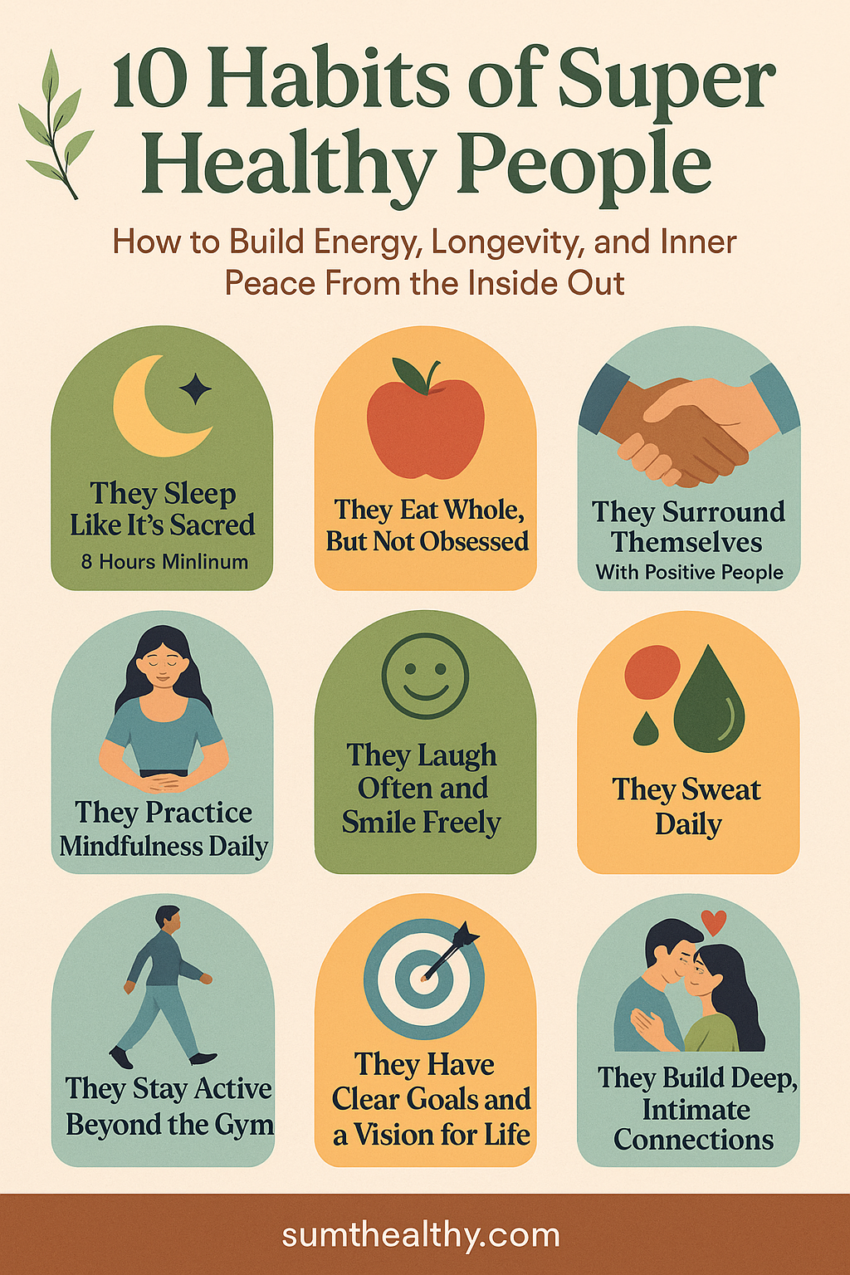
Many Americans believe they live relatively healthy lives, yet subtle daily habits—poor sleep timing, prolonged sitting, chronic stress, ultra-processed food consumption, excessive screen exposure, social isolation, lack of strength training, and skipped preventive care—quietly increase disease risk. Backed by data from the CDC, NIH, and leading medical institutions, this comprehensive guide explains the science behind these habits and provides practical, realistic strategies to correct them.
You drink water.
You try to “eat clean.”
You get to the gym when you can.
So why are you still tired, inflamed, gaining weight, anxious, or mentally foggy?
The uncomfortable truth is this: most health damage doesn’t come from dramatic bad decisions. It comes from subtle, socially normalized habits repeated every single day.
According to the Centers for Disease Control and Prevention, 6 in 10 adults in the United States live with at least one chronic disease, many of which are linked to lifestyle patterns. Meanwhile, the World Health Organization reports that noncommunicable diseases account for nearly three-quarters of deaths globally.
This isn’t about blame. It’s about awareness.
Below are eight common everyday lifestyle habits that may be quietly sabotaging your health—plus actionable steps to fix them.
1. You’re Sleeping “Enough” — But Not Sleeping Well
Most people focus on sleep duration. But sleep quality, consistency, and timing matter just as much.
The Centers for Disease Control and Prevention estimates that one in three adults does not get sufficient sleep. Even those who do clock 7–8 hours may experience disrupted circadian rhythms due to inconsistent bedtimes, late-night screen exposure, or alcohol consumption.
Take Marcus, a 41-year-old consultant. He sleeps seven hours on weekdays but stays up until 2 a.m. on weekends. By Monday, he feels jet-lagged without ever leaving his city. This phenomenon—often called “social jet lag”—disrupts metabolic function and hormone regulation.
Late-night scrolling is another silent saboteur. Blue light suppresses melatonin production, delaying deep sleep cycles. Add a nightly glass of wine to “unwind,” and sleep fragmentation worsens.
Practical Fixes:
- Go to bed and wake up at consistent times (yes, even weekends).
- Stop screen exposure at least 60 minutes before bed.
- Keep your bedroom cool and dark.
- Avoid alcohol within three hours of bedtime.
Improving sleep consistency alone can dramatically enhance mood, weight regulation, and cognitive clarity within weeks.
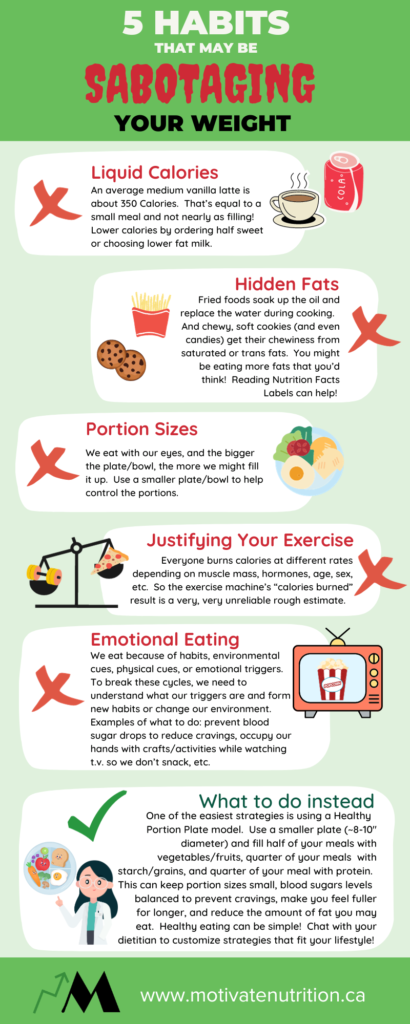
2. Your “Healthy” Diet Is Loaded With Ultra-Processed Foods
Many Americans believe they eat healthy because they avoid fast food. But ultra-processed foods often hide in plain sight.
Research funded by the National Institutes of Health shows that diets high in ultra-processed foods are strongly associated with obesity, cardiovascular disease, and metabolic dysfunction.
Consider Alicia, who replaces chips with protein bars and sugary cereals with “low-fat granola.” While marketed as healthy, many packaged foods contain added sugars, seed oils, stabilizers, and preservatives that disrupt gut microbiota and spike insulin.
Ultra-processed foods are engineered for hyper-palatability. They’re easy to overconsume and rarely satiating.
Common Ultra-Processed Culprits:
- Flavored yogurt with added sugars
- Granola and energy bars
- Sweetened plant-based milks
- Packaged “diet” snacks
- Bottled smoothies
Smarter Strategy:
Focus on whole foods with minimal ingredient lists:
- Fresh fruits and vegetables
- Lean proteins (eggs, beans, poultry, fish)
- Whole grains like oats and quinoa
- Healthy fats such as olive oil and avocados
If a product has more than five unfamiliar ingredients, reconsider.
3. You Exercise — But Sit All Day
Modern work culture encourages prolonged sitting. Even daily gym sessions cannot fully counteract extended sedentary behavior.
According to research cited by the Mayo Clinic, sitting for prolonged periods increases risk of heart disease and early mortality—even among those who exercise regularly.
Take Daniel, who runs three miles every morning but sits for nine hours at his desk. His step count outside workouts rarely exceeds 4,000 steps.
Sitting reduces circulation, lowers calorie burn, and impairs insulin sensitivity.
Micro-Movement Solutions:
- Stand or walk for five minutes every hour.
- Take walking meetings or phone calls.
- Use a sit-stand desk part-time.
- Set movement reminders on your smartwatch.
Health is cumulative. Tiny movement breaks compound over time.
4. Chronic Stress Is Quietly Aging You
Stress isn’t just emotional—it’s physiological.
The American Psychological Association links chronic stress to increased inflammation, digestive disorders, sleep disruption, and cardiovascular disease.
Rebecca, a mother of two balancing remote work and caregiving, feels “functional.” But frequent tension headaches and stomach pain signal elevated cortisol levels.
Chronic stress keeps the body in fight-or-flight mode, impairing immune function and accelerating aging.
Science-Backed Stress Relief:
- 10 minutes of daily deep breathing or mindfulness
- Walking outdoors without devices
- Limiting news consumption
- Seeking therapy or counseling support
Stress management isn’t indulgent—it’s preventive medicine.
5. You’re Socially Connected Online — But Isolated Offline
Loneliness has measurable health consequences.
A decades-long study from Harvard University found that strong social relationships are among the most significant predictors of longevity and happiness.
Consider Jason, who works remotely and communicates mostly via Slack and text messages. Though constantly “connected,” he feels increasingly detached.
Isolation increases inflammation and weakens immune response. Humans are biologically wired for in-person connection.
Rebuild Social Health:
- Schedule weekly in-person interactions.
- Join local clubs or community classes.
- Prioritize deep conversations over passive scrolling.
Connection is not optional for long-term well-being.
6. Your Phone Is Rewiring Your Brain
The average American spends several hours daily on smartphones, according to the Pew Research Center.
Excessive screen time reduces attention span, increases anxiety, and disrupts sleep cycles.
Lauren wakes up and immediately checks notifications. Within minutes, she’s exposed to emails, news alerts, and social media comparison. Her stress response activates before her feet hit the floor.
Digital overstimulation conditions the brain for constant dopamine spikes.
Digital Reset Plan:
- Keep phones out of bedrooms.
- Establish screen-free mornings.
- Disable non-essential notifications.
- Track weekly screen time and reduce gradually.
Even small reductions improve focus and emotional regulation.
7. You’re Ignoring Strength Training
Cardio is valuable—but muscle mass is essential.
The Cleveland Clinic emphasizes that resistance training supports bone density, metabolic health, and insulin sensitivity.
After 30, adults naturally lose muscle mass unless actively maintaining it. Susan, 55, walks daily but avoids weights. She notices decreased energy and joint stability.
Strength training isn’t about bodybuilding—it’s about functional longevity.
Beginner-Friendly Approach:
- Two strength sessions per week.
- Focus on compound movements (squats, push-ups, lunges).
- Gradually increase resistance.
- Ensure adequate protein intake.
Muscle is protective. Build it early and maintain it consistently.
8. You Skip Preventive Care
Many people only see doctors when symptoms arise.
The U.S. Preventive Services Task Force provides evidence-based recommendations for screenings that detect disease early.
Skipping annual checkups, dental cleanings, mental health evaluations, and blood work allows silent conditions to progress.
Preventive care identifies risk factors before they become crises.
Don’t Delay:
- Annual physical exam
- Blood pressure and cholesterol screening
- Mental health check-ins
- Age-appropriate cancer screenings
Prevention is far less expensive than treatment.
10 Frequently Asked Questions About Everyday Habits and Health
1. What daily habits are quietly damaging my health?
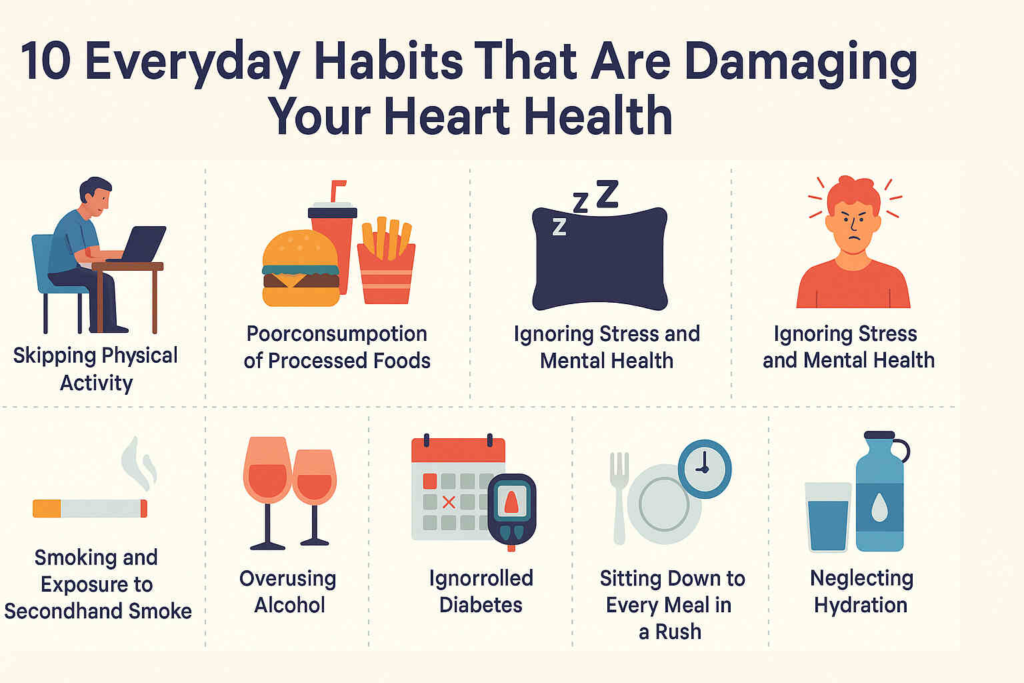
Inconsistent sleep, ultra-processed food consumption, prolonged sitting, chronic stress, excessive screen time, and lack of strength training are leading contributors.
2. Is sitting really that harmful if I exercise?
Yes. Extended sitting increases cardiovascular and metabolic risk—even in active individuals.
3. How many hours of sleep do adults actually need?
Most adults require 7–9 hours of consistent, high-quality sleep nightly.
4. Are protein bars unhealthy?
Many contain added sugars and artificial ingredients. Always read labels carefully.
5. Can stress really cause physical illness?
Absolutely. Chronic stress elevates cortisol, contributing to inflammation and disease risk.
6. Is walking enough exercise?
Walking is excellent for cardiovascular health, but adding resistance training enhances longevity.
7. How does loneliness affect physical health?
Social isolation increases inflammation, weakens immunity, and raises mortality risk.
8. How can I reduce screen addiction?
Start with phone-free mornings, disable notifications, and track usage patterns.
9. What is the fastest lifestyle change with the biggest impact?
Improving sleep consistency often delivers rapid improvements in energy and mood.
10. How long does it take to reverse unhealthy habits?
Noticeable benefits often appear within 2–4 weeks of consistent behavior change.
A Practical 30-Day Lifestyle Reset Plan
Change doesn’t require perfection. It requires momentum.
Week 1: Stabilize sleep schedule.
Week 2: Add two resistance training sessions.
Week 3: Replace ultra-processed snacks with whole foods.
Week 4: Reduce screen time by 25% and add one social activity.
Small shifts create lasting transformation.
Final Thoughts: Health Is Built in Small Decisions
You don’t need extreme dieting.
You don’t need two-hour workouts.
You don’t need total digital elimination.
You need awareness.
The habits quietly shaping your health are ordinary—and that’s why they’re powerful.
Your future health is determined less by dramatic change and more by repeated daily behaviors. Shift them intentionally, and your energy, clarity, and resilience will follow.
The question isn’t whether your habits are shaping you.
The question is: Are they shaping you in the direction you want?