
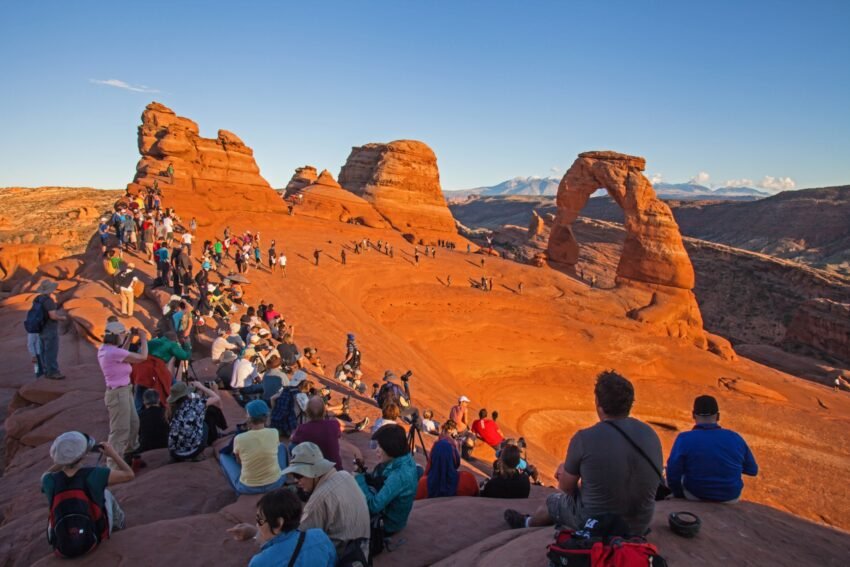
National parks are experiencing record visitation, but experienced travelers know that avoiding crowds is less about luck and more about strategy. From shoulder-season timing and lesser-known park units to early entry routines and smart lodging choices, this guide explains how to experience America’s national parks with more space, less stress, and greater connection to the landscape.
America’s national parks are more popular than ever. According to the National Park Service, annual recreation visits have exceeded 300 million in recent years. A significant share of that traffic concentrates in a small group of marquee parks, including Great Smoky Mountains National Park, Yellowstone National Park, and Zion National Park.
Crowds are not inherently negative. They reflect strong public interest in conservation and outdoor recreation. But heavy visitation can affect parking availability, trail access, wildlife viewing quality, and overall experience.
Seasoned park travelers approach these realities differently. They don’t avoid national parks—they adjust how, when, and where they visit.
Below is what experienced visitors consistently do to reduce congestion and enhance the quality of their trip.
They Prioritize Timing Over Destination
One of the most common search questions is: “What is the least crowded time to visit national parks?”
The answer is consistent across regions: shoulder season.
For most U.S. parks, this means:
- Late April to early June (before schools release for summer)
- Mid-September through October
- Early winter in warmer-climate parks
For example, visitation at Rocky Mountain National Park peaks between June and August. In contrast, September often brings stable weather, thinner crowds, and better wildlife activity during elk rut season.
Similarly, visiting Acadia National Park in early October offers crisp air and foliage without the intense summer parking pressure.
Timing affects experience more than most travelers expect. A popular park on a Tuesday in May can feel dramatically different from that same park on a Saturday in July.
They Arrive Earlier Than Most Visitors
Another frequently searched question: “How early should I arrive at a national park?”
Experienced travelers aim to enter parks before 8:00 a.m.—and often before 7:00 a.m. in high-traffic destinations like Yosemite National Park.
Early arrival accomplishes several things:
- Secures parking at trailheads
- Avoids entrance station backups
- Provides better lighting for photography
- Increases chances of wildlife sightings
- Offers quieter trails
Many seasoned visitors structure their day around this rhythm:
- Sunrise hike
- Midday rest or scenic drive
- Late afternoon secondary activity
- Early dinner outside peak hours
This pacing reduces exposure to the most congested windows, typically between 10 a.m. and 3 p.m.
They Stay Outside the Park Boundary
Search trend: “Is it better to stay inside or outside national parks?”
While in-park lodging offers proximity, it also fills quickly and can anchor visitors to crowded central zones.
Staying 20–45 minutes outside a park often provides:
- Lower nightly rates
- More restaurant options
- Flexible check-in times
- Easier grocery access
For example, towns outside Grand Canyon National Park can offer quieter evenings compared to lodging near the South Rim entrance.
Additionally, alternative gateways near Glacier National Park—particularly on less-traveled sides—can feel noticeably less congested.
They Explore Secondary Trails
Most congestion occurs within one mile of visitor centers and iconic viewpoints.
Seasoned travelers ask a different question: “What trails are less popular but still scenic?”
In parks like Grand Teton National Park, trails farther from Jenny Lake see significantly lighter use despite comparable views.
Strategies include:
- Choosing longer loop hikes over short out-and-back routes
- Hiking during non-peak hours
- Visiting ranger stations for current trail suggestions
- Reviewing topographic maps rather than social media lists
The farther you move from roadside overlooks, the more space you typically gain.
They Consider Lesser-Known Park Units
The National Park System includes over 400 units—not just the 63 designated national parks.
Travelers often search: “What are underrated national parks?”
Examples of high-value, lower-crowd alternatives include:
- North Cascades National Park
- Capitol Reef National Park
- Great Basin National Park
Beyond traditional parks, national monuments and recreation areas also offer compelling landscapes with fewer visitors.
The advantage is not exclusivity—it’s access. Parking is easier. Trailheads are calmer. Campsites are more available.
They Understand Reservation Systems
In recent years, parks such as Arches National Park and Glacier National Park have implemented timed-entry systems during peak seasons.
Seasoned travelers:
- Monitor official park websites months in advance
- Set calendar reminders for permit release dates
- Build flexibility into travel windows
This approach avoids last-minute frustration and reduces the need for crowded midday entry attempts.
They Visit During Weather Windows Others Avoid
Another search query: “Is it worth visiting national parks in winter?”
In many cases, yes—with preparation.
Winter visits to Bryce Canyon National Park offer snow-dusted hoodoos and sparse visitation. Early spring at Shenandoah National Park can provide waterfall flow without peak Skyline Drive congestion.
The key is realistic expectations:
- Limited services
- Road closures in higher elevations
- Shorter daylight hours
For flexible travelers, trade-offs often result in more solitude.
They Plan Around Weekdays
Crowd patterns in national parks mirror general U.S. travel habits.
According to transportation data from the Bureau of Transportation Statistics, weekend recreational travel significantly exceeds weekday travel.
Visiting Tuesday through Thursday can substantially reduce congestion, particularly at heavily trafficked entrances.
They Treat Iconic Viewpoints Strategically
Iconic viewpoints—such as Old Faithful in Yellowstone National Park—attract predictable clusters of visitors.
Experienced visitors:
- Visit early or near sunset
- Check eruption schedules
- Pair iconic stops with lesser-known hikes
The result is a balanced itinerary that includes highlights without spending the entire day in parking lots.
Frequently Asked Questions
1. What is the least crowded national park in the U.S.?
Parks like Great Basin and North Cascades often see fewer visitors compared to marquee parks.
2. How early should I enter a national park?
Arriving before 8:00 a.m.—or earlier in peak season—significantly improves parking and trail access.
3. Are weekdays really less crowded?
Yes. Tuesday through Thursday typically see lighter visitation.
4. Is shoulder season worth the weather trade-offs?
Often yes. Cooler temperatures and thinner crowds enhance many experiences.
5. Are timed-entry reservations required everywhere?
No. Only select parks and seasons require them. Always verify on official park websites.
6. Is staying inside the park better?
It depends. Outside lodging may provide flexibility and less congestion.
7. Are lesser-known parks as scenic?
Many offer comparable landscapes with fewer visitors.
8. How can I avoid parking stress?
Arrive early, use shuttles where available, or choose secondary trailheads.
9. Is winter safe in national parks?
With proper preparation and awareness of closures, many parks are accessible year-round.
10. How far in advance should I plan?
For peak-season trips, begin monitoring permits and lodging 3–6 months ahead.
Space Is Part of the Experience
Crowd management in national parks is not about exclusivity; it is about intention. The most rewarding visits often happen when travelers adjust expectations, plan thoughtfully, and accept that timing matters as much as destination.
Solitude is rarely found by accident in popular parks. It is created through informed choices—arriving early, traveling off-peak, exploring secondary trails, and considering alternatives.
National parks are shared spaces. Visiting them responsibly, and strategically, allows room for both preservation and personal reflection.
Key Crowd-Avoidance Insights at a Glance
- Travel in shoulder seasons
- Enter parks before 8:00 a.m.
- Stay outside primary gateway towns
- Visit midweek
- Explore lesser-known park units
- Monitor timed-entry systems
- Choose longer or secondary trails
- Consider winter or early spring visits