
Summary
Most apps are deleted within days, yet a small number become part of daily life. This article explains why. Drawing on behavioral science, UX research, and real-world usage patterns, it explores how usefulness, trust, habit formation, and thoughtful design—not hype—determine whether an app quietly earns a permanent place on a user’s phone.
Why Most Apps Are Downloaded—and Forgotten
The average American smartphone user downloads dozens of apps each year, but research consistently shows that most are used only once or twice. According to mobile analytics firms, a significant share of apps are abandoned within the first week. This isn’t because users dislike apps; it’s because most apps fail to earn relevance in daily life.
People don’t keep apps because they are impressive. They keep them because the app solves a real problem, at the right moment, with minimal friction. When an app becomes useful during everyday decisions—planning a day, managing money, tracking habits, or reducing mental load—it earns repeat usage. Over time, repetition turns into routine.
The apps that last are rarely flashy. They’re reliable, predictable, and quietly helpful.
The First Test: Immediate Value Within the First Week
An app’s long-term survival is often decided in its first few interactions. If a user doesn’t experience clear value early on, the app is mentally categorized as optional—or forgotten entirely.
Sticky apps tend to answer one clear question almost immediately: “Why should I keep this?”
That value might come from:
- Solving a recurring problem faster than existing tools
- Reducing cognitive effort (fewer steps, fewer decisions)
- Offering insight the user didn’t already have
For example, a budgeting app that shows spending patterns clearly within the first session creates a sense of awareness. A task manager that reduces clutter rather than adding it builds trust early. In contrast, apps that require extensive setup without payoff often lose users before habit formation even begins.

Habit Integration Beats Feature Count
Apps that stick don’t ask users to change their behavior dramatically. Instead, they integrate into habits users already have.
An app becomes durable when it aligns with:
- Existing routines (morning planning, commuting, winding down)
- Natural decision points (checking a balance, confirming a schedule)
- Emotional states (stress, curiosity, reflection)
This explains why many successful apps are used at the same time every day. A weather app checked in the morning. A note app opened during meetings. A fitness app reviewed after a workout. The timing matters as much as the function.
Apps that demand attention without fitting into life rhythms often feel intrusive, even if they’re powerful.
Trust Is Built Through Consistency, Not Marketing
Trust is one of the most overlooked factors in app retention. Users may try an app because of marketing, but they keep it because it behaves predictably.
Trust grows when:
- Data is accurate and transparently handled
- Updates improve functionality without disruption
- Notifications feel relevant rather than aggressive
Americans are especially sensitive to privacy and data use. Apps that explain why they request permissions—and still work without forcing them—tend to be perceived as more credible.
Consistency also matters in design. When buttons don’t move unexpectedly and core features remain stable, users feel safe relying on the app. Over time, that reliability reduces friction and increases dependence.
Emotional Payoff: Feeling More in Control
Many enduring apps offer something subtle but powerful: a sense of control.
This can show up in different ways:
- A calendar app that reduces scheduling anxiety
- A finance app that replaces uncertainty with clarity
- A wellness app that encourages reflection rather than guilt
These emotional benefits are rarely advertised directly, but users feel them. Apps that shame users, overwhelm them with metrics, or push unrealistic goals often fail to retain engagement.
The most trusted apps respect users’ limits. They support progress without pressure.
Design That Disappears Into the Background
The best-designed apps often feel invisible. They don’t demand attention; they support action.
This typically includes:
- Clean interfaces with minimal visual noise
- Clear hierarchy that guides the eye naturally
- Short learning curves with intuitive gestures
Research from UX-focused organizations shows that users strongly associate simplicity with competence. When an app “just works,” users stop thinking about it—and that’s exactly when it becomes sticky.
Apps that overload users with customization, pop-ups, or constant prompts may initially feel impressive, but they often create fatigue over time.
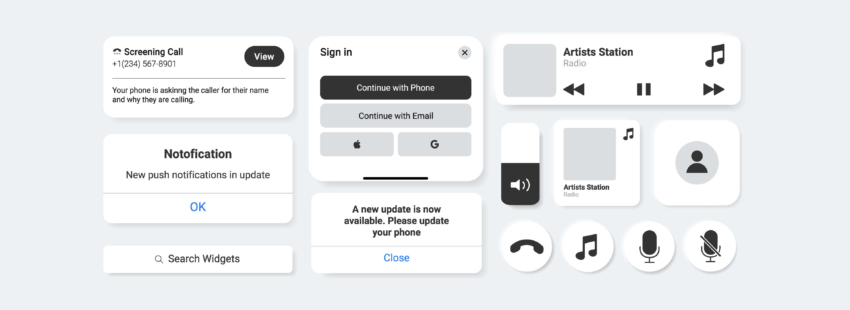
Notifications That Respect the User’s Time
Notifications can either reinforce habits or destroy them.
Sticky apps treat notifications as invitations, not demands. They are:
- Timely rather than frequent
- Context-aware rather than generic
- Easy to customize or mute
Many users keep apps installed specifically because notifications are helpful—but only when those notifications deliver value. An alert that prevents a missed meeting or highlights an unusual expense feels supportive. One that interrupts without purpose feels disposable.
The difference often determines whether an app remains installed after a few weeks.
Evolving Without Breaking the Relationship
Apps that last don’t stay static. They evolve carefully.
Users tend to abandon apps when updates:
- Remove features they rely on
- Change interfaces dramatically without explanation
- Introduce complexity without benefit
Successful apps communicate change clearly and respect existing workflows. They improve performance, add small enhancements, and adapt to new user needs without forcing relearning.
Longevity depends on growth that feels thoughtful rather than reactive.
Real-World Patterns Shared by Sticky Apps
Across categories—from productivity to wellness—apps that endure often share common traits:
- They solve one core problem exceptionally well
- They reduce mental effort instead of increasing it
- They earn trust through restraint, not persuasion
- They fit naturally into existing routines
These patterns matter more than trends. They explain why certain tools remain daily companions for years while others disappear after a weekend.
FAQs: What People Commonly Ask About App Retention
Why do I delete most apps so quickly?
Because many apps fail to show immediate relevance or require effort without payoff.
How long does it take for an app to become a habit?
Behavior research suggests consistent use over several weeks, usually tied to a routine.
Do free apps stick better than paid ones?
Not necessarily. Perceived value and usefulness matter more than price.
Are notifications essential for retention?
They help when relevant, but poorly timed notifications often drive deletion.
Does design really affect long-term use?
Yes. Clear, predictable design reduces friction and builds trust.
Why do simple apps often outperform complex ones?
They demand less cognitive load and integrate more easily into daily life.
Is onboarding still important after download?
Absolutely. Early clarity strongly influences whether an app is kept or ignored.
Can an app recover after poor early usage?
It’s difficult, but meaningful updates and re-engagement strategies can help.
Do Americans value privacy more than convenience?
Many users expect both. Apps that respect privacy without sacrificing usability tend to perform best.
How Apps Quietly Earn Their Place
The apps that stay aren’t the loudest or most ambitious. They earn their place by being useful at the exact moment users need them, by staying reliable over time, and by respecting attention rather than competing for it. Longevity isn’t about standing out—it’s about fitting in.
Signals That an App Is Built to Last
- Solves a recurring problem with minimal effort
- Fits naturally into existing routines
- Builds trust through consistency and transparency
- Evolves carefully without disrupting habits