
While marquee parks draw millions each year, many lesser-visited U.S. national parks offer equally compelling landscapes with fewer crowds and easier logistics. From remote desert basins to alpine island wilderness, these underrated parks provide meaningful access to nature without peak-season congestion. Here’s where to go, why visitation patterns are shifting, and how to plan wisely.
Why Look Beyond the Most Visited Parks?
Iconic parks such as Yellowstone National Park, Grand Canyon National Park, and Yosemite National Park remain extraordinary destinations. But their popularity comes with logistical realities: timed-entry systems, months-ahead campground reservations, heavy traffic corridors, and peak-season congestion.
According to the National Park Service (NPS), several top-tier parks now receive more than 4–10 million visitors annually, while many others see fewer than 1 million. That disparity means travelers willing to look beyond the headliners can experience remarkable landscapes with more space, greater campsite availability, and fewer restrictions.
For travelers searching phrases like “least crowded national parks,” “hidden gem national parks,” or “quiet national parks to visit this year,” the answer increasingly lies in the system’s quieter corners.
What Makes a Park “Underrated”?
An underrated national park is not lesser in quality. It typically has:
- Lower annual visitation
- Fewer tour buses and organized group traffic
- Less permit competition
- Strong scenery but less social media saturation
- Greater opportunities for solitude
These parks often require slightly more planning—longer drives, limited services, or weather awareness—but they reward preparation with immersion rather than congestion.
Below are standout parks worth serious consideration this year.
1. Great Basin National Park: Desert Silence and Dark Skies
Located in eastern Nevada, Great Basin consistently ranks among the least-visited national parks in the lower 48 states. That statistic alone appeals to travelers seeking space.
Yet the landscape is unexpectedly diverse: bristlecone pine groves older than many civilizations, limestone caves, and 13,000-foot Wheeler Peak rising above sagebrush basins.
Why consider it this year?
- Exceptional stargazing (designated International Dark Sky Park)
- Dramatic elevation changes within short distances
- Manageable summer temperatures compared to lower desert parks
Travel tip: Plan fuel stops carefully. Services are limited, but the tradeoff is minimal traffic and uninterrupted horizon lines.
2. Capitol Reef National Park: Utah’s Quieter Red Rock
While Utah’s “Mighty Five” parks are all scenic, Capitol Reef often receives fewer visitors than Zion National Park or Arches National Park.
The park’s defining feature—the Waterpocket Fold—creates miles of colorful cliffs, domes, and slot canyons. Orchard groves planted by early settlers still produce fruit in season.
Advantages include:
- Less shuttle dependence
- Easier parking access
- Expansive backcountry drives
For travelers frustrated by Zion’s timed entry reservations, Capitol Reef offers similar geology with more flexibility.
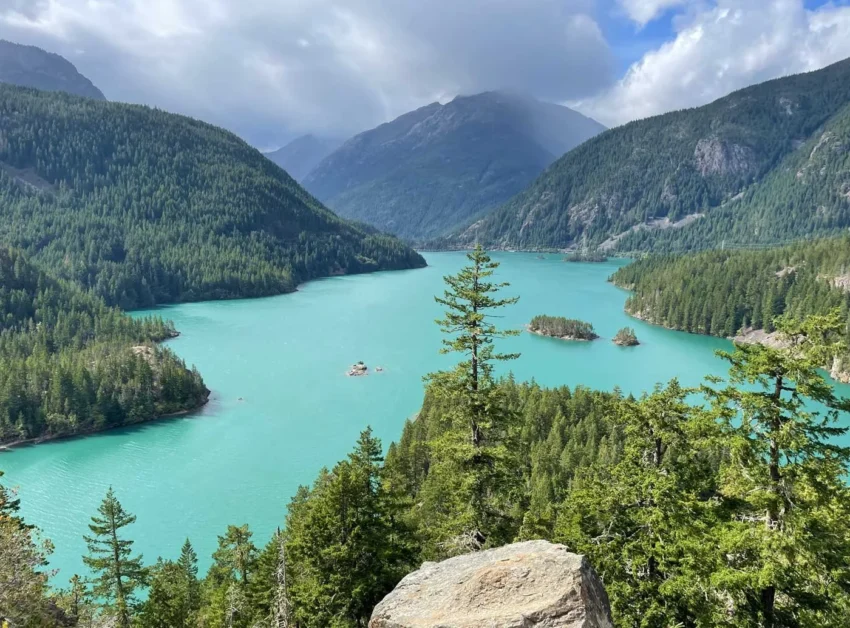
3. North Cascades National Park: Alpine Wilderness Without the Crowds
Often overshadowed by Olympic National Park and Mount Rainier National Park, North Cascades delivers rugged alpine scenery comparable to the Swiss Alps.
With hundreds of glaciers and turquoise alpine lakes, it remains one of the least-visited parks in Washington.
What travelers appreciate:
- Challenging but rewarding hiking trails
- Dramatic viewpoints along Highway 20
- Lower overall vehicle congestion
It’s best suited for experienced hikers comfortable with elevation gain and variable weather.
4. Isle Royale National Park: Remote Island Solitude
Accessible only by ferry or seaplane, Isle Royale in Lake Superior feels intentionally removed from mainland bustle.
Visitor numbers remain low compared to mainland parks. Wildlife sightings include moose and foxes, and the surrounding waters provide excellent kayaking.
Key planning considerations:
- Limited operating season (typically late spring through early fall)
- Reservations required for ferries
- Minimal cell service
For travelers asking, “Where can I truly disconnect in a national park?” Isle Royale is a credible answer.
5. Congaree National Park: Old-Growth Forest in the Southeast
Congaree protects one of the largest intact expanses of old-growth bottomland hardwood forest in the United States.
It is accessible yet rarely crowded. Elevated boardwalks allow exploration of towering trees and floodplain ecosystems.
Why it works for many travelers:
- Easy day-trip potential
- Family-friendly trails
- Strong biodiversity
It’s particularly compelling in late fall and early spring when humidity and insects are less intense.
6. Guadalupe Mountains National Park: High Desert Elevation
Often overlooked in favor of Big Bend National Park, Guadalupe Mountains offers some of Texas’s most dramatic vertical terrain.
Highlights include:
- Guadalupe Peak (the highest point in Texas)
- Fossilized reef formations
- Wide-open desert panoramas
Its remote location deters heavy traffic, preserving an atmosphere of scale and stillness.
Why Are These Parks Less Crowded?
Several factors influence lower visitation:
- Geographic isolation – Longer drives reduce spontaneous tourism.
- Limited amenities – Fewer hotels and restaurants nearby.
- Lower marketing visibility – Less exposure on travel platforms.
- Challenging terrain – Steeper trails or limited infrastructure.
For prepared travelers, these characteristics become strengths rather than drawbacks.
How to Plan an Underrated Park Trip
Travelers frequently ask: “How do I prepare for a less-visited national park?”
Here’s a practical framework:
Research Infrastructure
- Confirm operating seasons
- Review campground availability
- Check road conditions
- Download offline maps
Understand Weather Patterns
Mountain and desert parks can experience rapid weather shifts. Shoulder seasons often provide optimal balance between comfort and accessibility.
Plan Supplies Strategically
Underrated often means under-serviced. Bring:
- Extra water
- Fuel buffer
- Physical maps
- Layered clothing
Preparation enhances safety and enjoyment.
Are Lesser-Known Parks Really Better?
The answer depends on your priorities.
If you value:
- Shorter lines
- Easier parking
- Quieter trails
- Greater schedule flexibility
then yes, these parks can feel more rewarding.
If you prioritize:
- Extensive ranger programs
- Large visitor centers
- Major infrastructure
you may prefer the headliners.
The key is alignment with your travel style.
Frequently Asked Questions
1. What is the least visited national park in the lower 48?
Visitation numbers vary annually, but parks like Great Basin and North Cascades consistently rank among the lowest in the contiguous U.S.
2. Are underrated parks harder to access?
Often yes, but the tradeoff is reduced congestion.
3. Do lesser-known parks have fewer amenities?
Typically yes. Expect fewer restaurants and lodging options nearby.
4. Is camping easier to reserve in these parks?
Generally, yes—especially compared to high-demand parks in summer.
5. Are they suitable for families?
Many are, though trail difficulty varies by park.
6. What time of year is best?
Late spring and early fall often balance weather and crowd levels.
7. Are these parks safe?
Yes, when standard outdoor safety precautions are followed.
8. Do they require permits?
Some backcountry areas do; always verify on the NPS website.
9. Can I visit multiple underrated parks in one trip?
Regional clusters—such as Utah or Washington—make multi-park itineraries feasible.
Why This Year Is an Ideal Time to Explore Them
Travel patterns are shifting. With increased awareness of overtourism, more Americans are seeking dispersed destinations. That interest will likely continue growing.
Exploring these parks now offers:
- Greater campsite availability
- More flexible itineraries
- Meaningful solitude
As demand redistributes across the national park system, early adopters may benefit from the current balance between accessibility and tranquility.
Choosing Space Over Spectacle
The most visited parks will always hold cultural and scenic importance. But America’s national park system includes 60+ landscapes that deserve attention.
Looking beyond the headliners is not about avoiding popularity—it’s about rediscovering scale, quiet, and immersion.
For many travelers, that shift transforms a trip from logistical exercise into restorative experience.
Trailhead Decisions That Shape Better Trips
Choosing a lesser-known park often results in:
- More spontaneous trail access
- Easier campsite reservations
- Fewer timed-entry frustrations
- Stronger sense of discovery
- Reduced environmental strain on overcrowded parks
- Increased support for smaller gateway communities
- Greater connection to natural soundscapes
- More flexible daily planning