
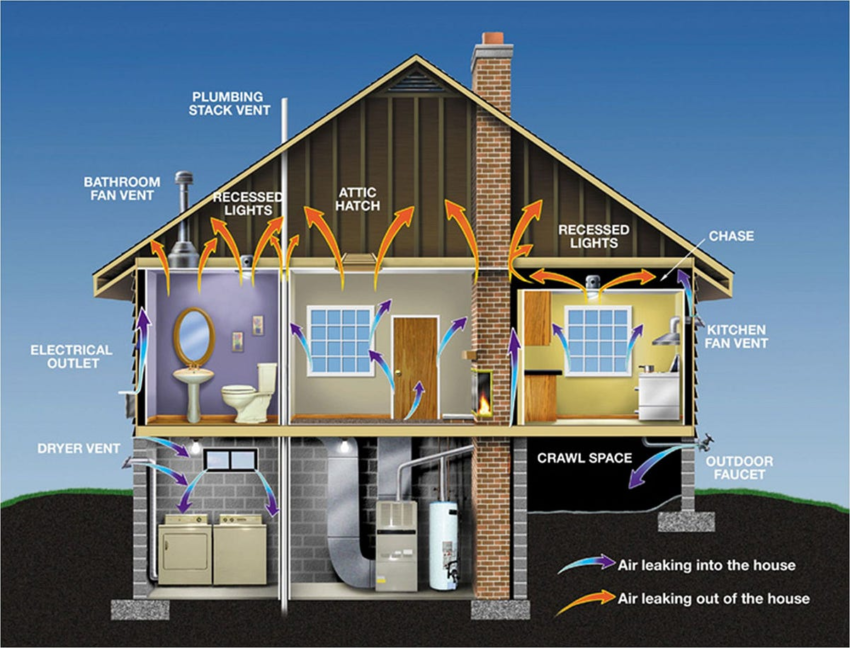
Many American households can reduce energy waste without major renovations or expensive upgrades. This guide outlines seven practical weekend DIY projects—from air sealing and duct improvements to lighting and water-heating fixes—that quietly improve efficiency and comfort. Grounded in data from federal energy agencies, these projects focus on measurable results, affordability, and long-term performance.
Energy efficiency rarely comes from dramatic overhauls. In most homes, waste accumulates gradually—through small air leaks, poorly insulated attic spaces, inefficient lighting, and minor mechanical oversights. According to the U.S. Energy Information Administration, the average American household spends more than $2,000 annually on energy, with heating and cooling accounting for the largest portion.
The encouraging news is that many efficiency improvements are manageable in a single weekend. They don’t require structural renovations or professional crews. Instead, they focus on reducing unnecessary energy loss and improving how your home performs day to day.
Below are seven projects that consistently deliver results.
1. Seal Air Leaks Around Doors, Windows, and the Attic Hatch
Air leakage is one of the most overlooked causes of high energy bills. The U.S. Department of Energy estimates that air leaks can account for 25–30% of residential heating and cooling energy use.
In practical terms, that means conditioned air you’ve paid to heat or cool is escaping through small gaps.
Common leakage points include:
- Door frames and thresholds
- Window trim
- Baseboards along exterior walls
- Electrical outlets on outside-facing walls
- Attic hatches
A Saturday spent applying caulk, foam sealant, and weatherstripping can noticeably reduce drafts. Many homeowners report improved comfort immediately, especially in older homes built before modern air-sealing standards.
One homeowner in Illinois discovered a visible gap around the attic hatch. After installing weatherstripping and insulating the hatch panel, winter drafts decreased significantly in the upstairs hallway.
This is often the highest return DIY efficiency upgrade available.
2. Add or Top Off Attic Insulation
Insulation acts as a thermal barrier between your living space and outdoor temperatures. If attic insulation is thin or uneven, your HVAC system works harder to maintain comfort.
The ENERGY STAR program recommends insulation levels of R-38 to R-60 in many U.S. climate zones.
A simple weekend project involves:
- Measuring insulation depth
- Sealing air leaks first
- Adding blown-in cellulose or fiberglass batts where accessible
In colder climates, insulation upgrades can significantly reduce heating demand. In warmer regions, they help prevent attic heat from radiating downward into living spaces.
The improvement may not be visible day to day—but utility bills often reflect the change.
3. Seal and Insulate Accessible Ductwork
Leaky ducts quietly waste energy. The U.S. Department of Energy reports that typical duct systems can lose 20–30% of conditioned air before it reaches living areas.
If ducts run through attics, basements, or crawl spaces, sealing them can improve system efficiency.
This project involves:
- Applying mastic sealant to duct joints
- Securing loose connections
- Adding insulation wrap where ducts pass through unconditioned spaces
Unlike equipment replacement, duct sealing improves the performance of the system you already have.
4. Upgrade All High-Use Lighting to LEDs
Lighting represents roughly 9% of home electricity use, according to the U.S. Energy Information Administration.
Replacing high-use bulbs with LEDs provides immediate efficiency gains. LEDs use at least 75% less energy than incandescent bulbs and last significantly longer.
A typical household replacing 15–20 frequently used bulbs may reduce annual electricity costs by over $100, depending on usage and rates.
This is one of the simplest upgrades available—no tools required.
5. Install a Smart or Programmable Thermostat
Heating and cooling account for nearly half of household energy use.
The U.S. Environmental Protection Agency indicates that properly programmed thermostats can reduce heating and cooling bills by about 8% annually.
In a weekend installation, homeowners can:
- Replace outdated manual thermostats
- Program temperature setbacks
- Adjust seasonal settings
Best practice includes setting heating to 68°F when home and lowering temperatures overnight in winter.
This upgrade is especially effective in homes with predictable occupancy schedules.
6. Insulate Hot Water Pipes and Adjust Water Heater Settings
Water heating accounts for approximately 18% of household energy use.
Simple weekend steps include:
- Lowering water heater temperature to 120°F
- Installing pipe insulation on exposed hot water lines
- Adding low-flow showerheads
Pipe insulation reduces standby heat loss and can deliver hot water faster, reducing water waste as well.
Many homeowners overlook this area because it’s out of sight, but improvements can be both inexpensive and effective.
7. Install Advanced Power Strips to Reduce Phantom Load
Electronics continue drawing electricity even when turned off.
The U.S. Department of Energy estimates standby power may account for 5–10% of residential electricity use.
Advanced power strips automatically shut off power to peripheral devices when a main device powers down.
They’re particularly useful for:
- Home offices
- Entertainment centers
- Gaming consoles
This upgrade reduces silent energy drain without changing daily habits.
Frequently Asked Questions
1. Which weekend project saves the most money?
Air sealing often provides the highest immediate return because it reduces heating and cooling waste.
2. How do I know if my attic insulation is inadequate?
Measure insulation depth and compare it to recommended R-values for your climate zone.
3. Is duct sealing difficult?
Accessible ducts can be sealed with mastic; more complex systems may require professional testing.
4. Are LED bulbs really worth replacing?
Yes. LEDs use significantly less electricity and last much longer than incandescent bulbs.
5. Do smart thermostats actually reduce bills?
Yes, when programmed properly and used consistently.
6. How much energy does phantom load waste?
Standby energy may account for 5–10% of total electricity use.
7. Should I replace windows first?
Not usually. Air sealing and insulation generally provide better returns.
8. Can renters complete any of these projects?
Yes. LEDs, power strips, and thermostat programming are renter-friendly.
9. How quickly will I see savings?
Some improvements—like air sealing—can reduce drafts immediately; bill savings are often visible within one billing cycle.
Quiet Improvements, Measurable Results
Energy efficiency does not require dramatic construction projects. In fact, the most effective upgrades are often subtle and structural—reducing waste, improving airflow, and strengthening thermal barriers.
A few focused weekends can meaningfully reduce demand on heating and cooling systems, extend equipment life, and improve comfort throughout the year.
The key is consistency. Each project builds upon the next, creating cumulative savings over time.
A Weekend Plan for Long-Term Performance
- Seal air leaks around doors, windows, and attic hatches
- Improve attic insulation levels
- Seal accessible ductwork
- Replace high-use bulbs with LEDs
- Install a programmable thermostat
- Insulate hot water pipes
- Reduce phantom load with smart power strips