

Summary
Sustainable physical fitness for busy adults focuses on consistency, flexibility, and long-term health—not extreme workouts or rigid plans. This approach prioritizes realistic movement, recovery, and habit-building that fits work, family, and daily responsibilities. By aligning fitness with real life, adults can improve strength, energy, and resilience without burnout or constant disruption.
Understanding Sustainability in Adult Fitness
For many busy adults, physical fitness often feels like an all-or-nothing proposition. One week of intense motivation may be followed by weeks of inactivity due to work deadlines, family obligations, travel, or sheer exhaustion. Sustainable fitness takes a different approach. It emphasizes what can be maintained over years, not just weeks.
Sustainability in fitness means designing routines that adapt to fluctuating schedules and energy levels. It allows room for missed workouts without guilt and prioritizes progress that compounds slowly. According to the Centers for Disease Control and Prevention (CDC), adults benefit significantly from even moderate, consistent activity, reinforcing that fitness does not require perfection to be effective.
Why Traditional Fitness Plans Fail Busy Adults
Many popular fitness programs are built around ideal conditions—ample free time, predictable schedules, and high recovery capacity. Busy adults rarely live in those conditions. Long workouts, rigid weekly schedules, and aggressive goals can become barriers rather than motivators.
Common challenges include:
- Long work hours or unpredictable shifts
- Caregiving responsibilities
- Mental fatigue and stress
- Limited access to gyms or equipment
Research published in the American Journal of Health Promotion shows adherence—not intensity—is the strongest predictor of long-term fitness outcomes. Programs that fail to accommodate real-world variability often collapse under pressure.

Reframing Fitness as a Lifestyle System
Sustainable fitness is not a program you follow temporarily. It is a system that integrates movement into daily life. This mindset shift reduces friction and increases consistency.
Rather than asking, “How can I fit workouts into my life?” the better question becomes, “How can my life support regular movement?” This reframing leads to smarter decisions—walking meetings, strength training at home, or choosing recovery over exhaustion when needed.
Over time, this systems-based approach builds resilience. Fitness becomes something you return to automatically, even after interruptions, rather than something you repeatedly restart.
How Much Exercise Do Busy Adults Really Need?
One of the most common questions Americans search for is how much exercise is “enough.” Federal physical activity guidelines recommend at least 150 minutes of moderate-intensity aerobic activity per week, plus muscle-strengthening activities on two days.
For busy adults, this does not need to happen in long sessions. Evidence shows similar benefits when activity is accumulated in shorter bouts throughout the day. Three 10-minute walks can deliver comparable cardiovascular benefits to a single 30-minute session.
The key is consistency across weeks and months, not daily perfection.
Time-Efficient Training That Actually Works
Efficiency matters when time is limited. Sustainable fitness focuses on movements that deliver the greatest return without excessive fatigue.
Examples include:
- Compound strength exercises that work multiple muscle groups
- Interval-based cardio that adapts to energy levels
- Mobility routines that support joint health and recovery
Short, focused sessions—20 to 30 minutes—are often more realistic and easier to repeat. Adults who maintain these routines tend to experience better adherence and lower injury risk than those attempting longer, sporadic workouts.
Strength Training as a Foundation, Not an Add-On
Strength training is often misunderstood as optional or aesthetic. For busy adults, it is foundational. Maintaining muscle mass supports metabolism, joint stability, bone density, and daily function.
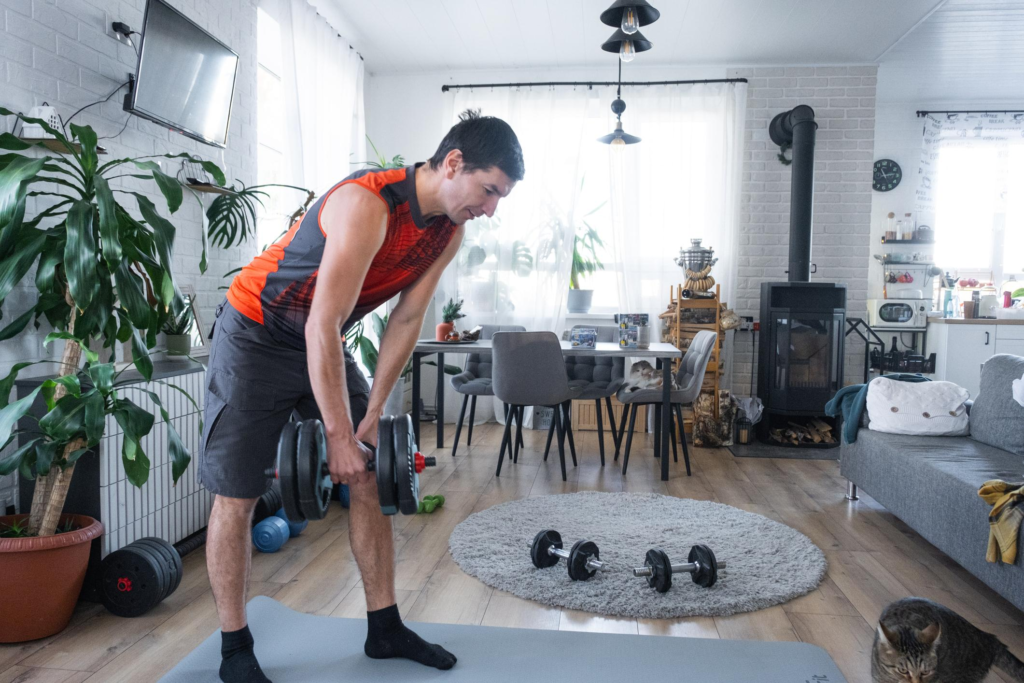
The National Institute on Aging emphasizes resistance training as essential for adults over 30 to counter natural muscle loss. Sustainable routines often include two to three full-body sessions per week using bodyweight, resistance bands, or dumbbells.
Strength training also improves efficiency in daily tasks, making physical effort feel easier outside the gym.
Cardio That Fits Real Schedules
Cardiovascular fitness does not require long-distance running or expensive equipment. Walking, cycling, rowing, and even active commuting all contribute to heart health.
Busy adults benefit from flexible cardio options:
- Brisk walks during lunch breaks
- Short cycling sessions before work
- Weekend hikes or recreational sports
The goal is movement that supports energy rather than depletes it. Cardio should leave you feeling capable of returning tomorrow, not needing days to recover.
Recovery: The Overlooked Pillar of Sustainability
Recovery is often neglected, yet it determines whether fitness remains sustainable. Poor sleep, chronic stress, and inadequate recovery increase injury risk and reduce motivation.
Data from the National Sleep Foundation shows adults who sleep fewer than six hours per night are significantly less likely to maintain regular physical activity. Sustainable fitness respects recovery as part of training, not a sign of weakness.
Simple recovery practices include mobility work, light activity on rest days, and prioritizing sleep whenever possible.
Nutrition That Supports, Not Complicates, Fitness
Busy adults often search for nutrition plans that promise simplicity. Sustainable fitness nutrition avoids extremes and focuses on adequacy rather than restriction.
Practical principles include:
- Eating enough protein to support muscle maintenance
- Prioritizing whole foods most of the time
- Allowing flexibility for social and work-related meals
Rigid diets often fail under real-world pressure. A flexible, balanced approach supports both physical performance and mental well-being.
How to Stay Consistent When Life Gets Busy
Consistency does not mean rigidity. It means having fallback options when ideal plans fall apart. Busy adults who stay active long-term tend to have minimum standards rather than maximum expectations.
Examples include:
- A 10-minute mobility routine when workouts are not possible
- Walking on high-stress days instead of training intensely
- Scaling workouts down rather than skipping entirely
This adaptability prevents the “all-or-nothing” cycle that derails many fitness efforts.
Measuring Progress Without Obsession
Sustainable fitness is measured by function, energy, and resilience—not just numbers on a scale. Busy adults benefit from tracking indicators that reflect daily life.
These may include:
- Improved stamina during workdays
- Reduced joint pain or stiffness
- Greater consistency month to month
Progress that supports quality of life is more meaningful—and more motivating—than short-term physical changes alone.
Frequently Asked Questions
How can I stay fit with a full-time job and family?
By focusing on short, flexible workouts and integrating movement into daily routines.
Is working out three days a week enough?
Yes, when workouts are consistent and well-structured.
What’s the best time of day to exercise for busy adults?
The best time is the one you can maintain consistently, regardless of the clock.
Do I need a gym membership to stay fit?
No. Many effective routines can be done at home or outdoors.
How long should workouts be for sustainability?
Twenty to thirty minutes is often sufficient and easier to maintain.
Can walking really count as exercise?
Yes. Brisk walking provides significant cardiovascular and mental health benefits.
What if I miss workouts frequently?
Missing workouts is normal. Sustainability comes from returning without guilt.
How important is recovery compared to workouts?
Recovery is equally important and directly impacts long-term consistency.
Does sustainable fitness change with age?
Yes. Recovery, mobility, and strength become increasingly important over time.
When Fitness Fits the Life You Actually Live
Sustainable physical fitness is not about doing more. It is about doing what works—repeatedly, realistically, and without unnecessary friction. For busy adults, fitness succeeds when it supports energy, resilience, and daily life rather than competing with it. The most effective routines are the ones that survive real schedules, imperfect weeks, and changing priorities.
Key Ideas to Carry Forward
- Sustainability matters more than intensity
- Short, consistent workouts outperform sporadic extremes
- Recovery is essential, not optional
- Fitness should adapt to life, not replace it