
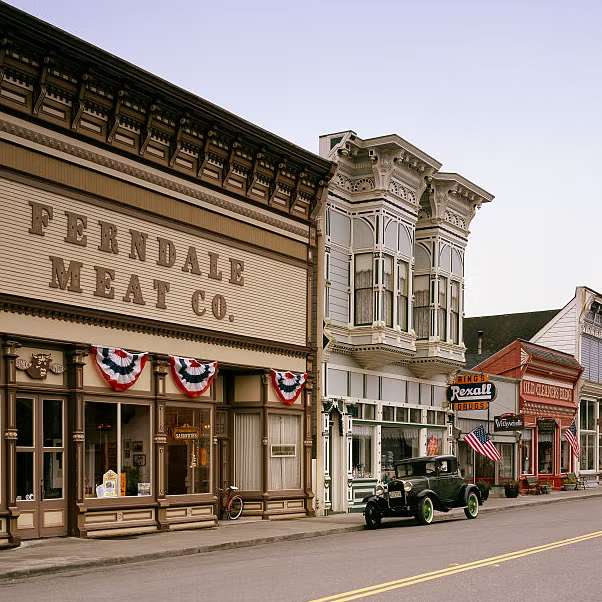
Across the United States, small towns are experiencing renewed economic and cultural vitality. Driven by remote work, outdoor recreation, heritage tourism, and shifting travel priorities, Americans are rediscovering destinations once overlooked. This revival is reshaping local economies while offering travelers authentic experiences, affordability, and access to nature—without the congestion of major metros.
A Subtle but Measurable Shift in American Travel
Over the past several years, American travel behavior has shifted in ways that extend beyond temporary trends. According to the U.S. Travel Association, domestic leisure travel now accounts for roughly 80% of total U.S. travel spending, and much of that growth has occurred outside major gateway cities. Rural counties and smaller metropolitan areas have seen measurable gains in visitation, particularly in regions offering outdoor recreation, cultural heritage, and walkable downtown districts.
This shift did not emerge overnight. The rise of remote work, combined with an increasing preference for less crowded destinations, has allowed travelers to rethink what constitutes a compelling getaway. Instead of defaulting to New York or Los Angeles, many Americans are searching for experiences that feel grounded, accessible, and distinctly regional.
The revival of small-town America is not uniform or universal—but it is observable. Main streets that once struggled with vacancy are seeing new cafés, artisan shops, and boutique accommodations. Restored theaters, community festivals, and farm-to-table restaurants are drawing visitors who might previously have overlooked these communities.
The result is a travel pattern rooted less in spectacle and more in substance.
Why Are America’s Small Towns Experiencing a Revival?
Several structural factors are contributing to renewed interest in smaller destinations.
1. Remote Work and Extended Stays
According to U.S. Census data, remote and hybrid work arrangements have remained significantly higher than pre-2020 levels. Workers with location flexibility are increasingly combining travel and work—often called “workcations.”
Smaller towns with reliable broadband, walkable centers, and proximity to nature have become attractive for extended stays. A two-week rental in a town like Traverse City, Michigan, or Taos, New Mexico, can cost less than a long weekend in a major coastal city, while offering deeper engagement with the local community.
2. Outdoor Recreation Demand
The Outdoor Industry Association reports that outdoor recreation participation reached record levels in recent years. National and state parks have seen heavy visitation, pushing travelers to seek alternatives in adjacent small towns.
Communities near public lands—such as Moab, Utah; Whitefish, Montana; and Stowe, Vermont—have built tourism economies around hiking, biking, skiing, and wildlife experiences. While some are now well-known, many smaller gateway towns remain comparatively uncrowded.
3. Affordability Pressures
Hotel rates in major U.S. cities have climbed steadily. Smaller towns often offer:
- Lower nightly lodging rates
- Reduced dining costs
- Free or low-cost outdoor attractions
- Easier parking and transportation
For families or multigenerational groups, these cost differences can be significant.
4. Interest in Authentic Local Culture
American travelers are increasingly seeking experiences that feel rooted in place. That might include:
- Regional food traditions
- Local history museums
- Artisan workshops
- Seasonal festivals
- Historic architecture
Smaller towns often preserve these elements more visibly than larger urban centers.
What Are Travelers Searching For?
Analysis of common search behavior reveals recurring questions:
- “Best small towns to visit in the U.S.”
- “Affordable weekend trips near me”
- “Hidden gem towns in America”
- “Walkable small towns with great food”
- “Small towns with scenic views”
The underlying motivation is not necessarily secrecy or exclusivity—it is manageability. Travelers want destinations that are easy to navigate, comfortable, and memorable without requiring complex logistics.
How Main Streets Are Reinventing Themselves
Many towns that struggled during manufacturing declines or agricultural downturns are now investing in revitalization. Federal and state programs, including grants from the U.S. Department of Agriculture and small business development initiatives, have supported infrastructure upgrades and storefront rehabilitation.
Downtown revitalization often follows a recognizable pattern:
- Restoration of historic buildings
- Recruitment of independent businesses
- Streetscape improvements (lighting, sidewalks, public art)
- Community programming (markets, concerts, seasonal events)
These improvements make towns more livable for residents and more appealing for visitors.
For example, towns across the Midwest have converted former warehouses into mixed-use spaces featuring cafés, breweries, and coworking hubs. In parts of the South, historic courthouse squares have become anchors for culinary tourism centered on regional cuisine.
What Makes a Small Town Attractive to Modern Travelers?
Through interviews, travel data, and consumer surveys, several characteristics consistently emerge.
Walkability
Visitors prefer compact downtowns where shops, restaurants, and lodging are within walking distance. A pedestrian-friendly layout reduces transportation stress and encourages exploration.
Distinct Identity
A clear sense of place matters. Whether rooted in maritime heritage, Appalachian music traditions, or desert art communities, towns that communicate a cohesive identity tend to stand out.
Access to Nature
Proximity to lakes, rivers, mountains, forests, or coastline remains one of the strongest draws. Outdoor access enhances appeal across age groups.
Reliable Amenities
Travelers expect certain standards:
- Strong cellular and Wi-Fi service
- Clean public facilities
- Transparent pricing
- Safety and lighting
The small-town appeal does not override practical expectations.
Where Is the Revival Most Noticeable?
While growth varies regionally, several patterns are visible across the United States.
The Mountain West
States such as Colorado, Montana, and Idaho have seen steady in-migration and tourism growth. Smaller towns offering trail networks and ski access have benefited from increased outdoor interest.
The Southeast
Communities in North Carolina, Tennessee, and Georgia with access to mountain ranges or historic districts have expanded hospitality offerings while maintaining scale.
The Great Lakes Region
Towns along Michigan’s lakeshore and Wisconsin’s Door County have experienced strong seasonal tourism supported by culinary and waterfront attractions.
The Northeast
New England villages have leveraged historic architecture and fall foliage tourism while diversifying with food and arts programming.
Are These Towns Sustainable Destinations?
A common concern is whether growth may undermine the qualities attracting visitors in the first place. Some communities have faced rising housing costs and strain on infrastructure.
Sustainable management strategies include:
- Visitor caps in sensitive outdoor areas
- Encouraging shoulder-season travel
- Supporting locally owned businesses
- Zoning protections for historic districts
When carefully managed, tourism can provide tax revenue that supports schools, roads, and community services.
What Should Travelers Consider Before Visiting?
Visiting a small town differs from visiting a large city. Expectations and planning matter.
Before you go:
- Confirm business hours; some restaurants close early.
- Book accommodations in advance during peak seasons.
- Respect local norms and community spaces.
- Research outdoor safety guidelines if hiking or boating.
Travelers who approach with curiosity and flexibility tend to have the most rewarding experiences.
How Does This Revival Affect Local Economies?
Tourism can play a stabilizing role in small-town economies. According to data from the Bureau of Economic Analysis, travel and tourism directly contributed over $2 trillion to U.S. economic output in recent years. While large metros account for much of this, rural counties have seen proportionally meaningful gains.
Economic benefits include:
- Job creation in hospitality and retail
- Increased property tax revenue
- Revitalized commercial real estate
- Incentives for preserving historic assets
However, balanced growth remains essential to prevent overdependence on seasonal tourism.
Frequently Asked Questions
1. Why are small towns becoming more popular travel destinations?
Remote work flexibility, affordability, and demand for outdoor recreation have shifted interest toward manageable, less crowded locations.
2. Are small towns cheaper to visit than big cities?
In many cases, yes. Lodging, dining, and parking often cost less, though high-demand destinations can approach city pricing during peak season.
3. What types of experiences do small towns offer?
Historic districts, regional cuisine, outdoor recreation, community festivals, and artisan markets are common features.
4. How do I find lesser-known towns near me?
State tourism websites, regional travel publications, and map-based searches for scenic byways or state parks often reveal nearby options.
5. Is small-town travel suitable for families?
Yes. Walkability, lower traffic density, and outdoor access often make small towns family-friendly.
6. Are these destinations crowded during holidays?
Popular towns can experience peak congestion during summer and fall foliage seasons. Visiting midweek or during shoulder months reduces crowding.
7. How long should I stay?
Two to three nights allows meaningful exploration without rushing.
8. Do small towns have reliable internet for remote work?
Many do, but speeds vary. Confirm Wi-Fi availability with lodging providers if work connectivity is essential.
9. How can visitors support local communities?
Shop locally owned businesses, dine at independent restaurants, and respect public spaces.
10. Are small towns safe for solo travelers?
Many have lower crime rates than large cities, but standard travel precautions still apply.
A Different Kind of American Journey
The renewed interest in small-town America reflects a broader recalibration of how Americans define travel value. Instead of prioritizing scale and spectacle, many travelers are choosing pace, proximity, and personality. The appeal lies not in novelty alone, but in rediscovering communities that balance heritage and adaptation.
For towns willing to invest thoughtfully, this revival offers opportunity without erasing identity. For travelers, it offers something increasingly rare: space to slow down.
Key Insights at a Glance
- Remote work flexibility supports extended stays in smaller communities.
- Outdoor recreation demand has elevated gateway towns.
- Affordability remains a primary motivator for domestic travel.
- Walkability and identity strongly influence destination appeal.