
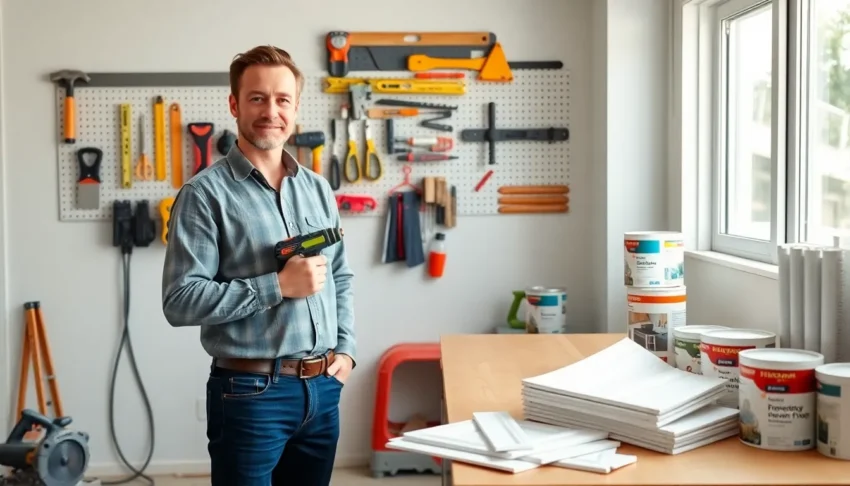
Not all DIY upgrades are worth your time or money. This practical guide outlines home improvements that measurably enhance comfort, efficiency, resale appeal, and daily function—without major renovation. Backed by housing data and real-world experience, it focuses on upgrades that improve how a home lives and performs, not just how it looks.
Why Some DIY Projects Pay Off—And Others Don’t
Homeowners across the U.S. often ask: Which DIY projects actually increase home value? What upgrades are worth doing before selling? How can I improve my home without overspending?
The answer lies in prioritizing improvements that strengthen three fundamentals:
- Functionality
- Energy efficiency
- Perceived maintenance and care
According to the National Association of Realtors (NAR), projects that improve curb appeal, replace outdated systems, or enhance efficiency consistently rank high in buyer appeal. Meanwhile, the annual Cost vs. Value Report from Remodeling Magazine shows that modest exterior improvements and system upgrades often recoup more value than high-end remodels.
The following upgrades focus on real-world impact—projects that make your home more comfortable now and more competitive later.
1. Improve Lighting for Function and Efficiency
Lighting affects both mood and marketability. Homes with dim, mismatched fixtures often feel dated or poorly maintained. Upgrading lighting is one of the most accessible DIY projects with measurable results.
Replacing old fixtures with simple, modern designs and switching to LED bulbs can:
- Lower energy usage
- Brighten interiors
- Modernize aesthetics
- Improve task visibility in kitchens and bathrooms
According to the U.S. Department of Energy, LED lighting uses at least 75% less energy than incandescent bulbs and lasts up to 25 times longer. For homeowners planning to sell, brighter spaces consistently photograph better and show better in person.
Experience-based tip: Stick to warm white (2700K–3000K) for living areas and neutral white (3500K–4000K) for workspaces like kitchens and garages.
2. Upgrade Kitchen Hardware and Fixtures—Not Cabinets
A full kitchen renovation is expensive and rarely DIY-friendly. However, targeted updates can transform perception without replacing cabinetry.
High-impact swaps include:
- Cabinet pulls and knobs
- Faucet replacement
- Under-cabinet lighting
- Updated pendant lights
Buyers often interpret outdated hardware as a sign that larger systems may also be dated. Clean, consistent finishes—such as brushed nickel or matte black—create cohesion.
In real estate practice, small kitchen updates routinely influence buyer impressions more than square footage changes.
3. Focus on Curb Appeal Maintenance
Many Americans search: Does curb appeal really increase home value?
The answer is yes—because it influences buyer interest before a showing even begins.
You don’t need elaborate landscaping. Instead, prioritize:
- Fresh mulch
- Trimmed shrubs
- Defined walkways
- Pressure-washed siding and driveways
- Updated house numbers and mailbox
NAR surveys regularly show that exterior appearance plays a strong role in buyer decisions. Cleanliness and upkeep signal responsible ownership.
4. Add Attic Insulation for Energy Performance
Energy efficiency isn’t glamorous, but it matters. Proper attic insulation can significantly reduce heating and cooling costs. The U.S. Department of Energy notes that heating and cooling account for roughly half of a typical American home’s energy use.
Blown-in insulation kits are DIY-friendly for accessible attics. The benefits include:
- Lower utility bills
- Improved indoor comfort
- Reduced HVAC strain
Buyers increasingly request utility cost estimates before making offers. Improved insulation directly supports that conversation.
5. Install a Programmable or Smart Thermostat
Smart thermostats remain one of the most practical technology upgrades for homeowners. Devices from companies like Google Nest and ecobee allow scheduling and remote access.
Why this matters:
- Helps reduce energy waste
- Demonstrates modernization
- Enhances convenience
Even if resale isn’t immediate, the energy savings accumulate over time.
6. Refresh Paint—With Restraint
Painting consistently ranks as one of the highest-ROI DIY upgrades. However, the key is neutrality and quality.
Homeowners often ask: What color should I paint before selling?
Safe choices include warm whites, soft greige tones, and light taupe shades. Avoid bold accent walls unless they are subtle and cohesive.
The difference between a rushed paint job and a carefully prepped one is immediately visible. Sanding, caulking, and priming are non-negotiable for a professional finish.
7. Modernize Bathroom Fixtures
Bathrooms heavily influence buyer perception. While tile replacement and vanity installation may require professionals, fixture updates are often DIY-accessible.
Consider replacing:
- Faucets
- Showerheads
- Vanity lights
- Mirrors
- Towel hardware
Water-efficient fixtures certified under programs from the Environmental Protection Agency can reduce water usage without sacrificing pressure.
Small improvements in bathrooms signal hygiene, upkeep, and care.
8. Improve Storage and Closet Organization
Storage consistently ranks as a buyer priority. Modular closet systems and adjustable shelving dramatically improve functionality.
Even small changes can:
- Double hanging capacity
- Create shoe and accessory zones
- Eliminate clutter
Experience shows that organized closets make homes feel larger—even when square footage remains unchanged.
9. Upgrade Interior Doors and Trim
Interior doors and baseboards quietly shape a home’s quality perception. Hollow-core doors or scuffed trim often date a space.
Replacing doors with solid-core models or repainting trim in crisp white creates a more substantial feel. This project requires precision but significantly enhances perceived craftsmanship.
10. Deep Clean or Refinish Flooring
Flooring dominates visual space. Before replacing materials, evaluate whether deep cleaning or refinishing is sufficient.
Professional-grade carpet cleaning or hardwood refinishing can:
- Remove odors
- Improve brightness
- Increase “move-in ready” appeal
In many markets, buyers hesitate when flooring appears worn—even if structurally sound.
11. Improve Exterior Lighting and Security
Exterior lighting improves safety and curb appeal simultaneously. Adding motion-sensor lights near entryways or upgrading porch lighting provides practical benefits.
Well-lit exteriors:
- Enhance security
- Improve nighttime aesthetics
- Increase buyer confidence
Lighting that appears deliberate—not improvised—signals attention to detail.
12. Create Flexible Living Spaces
Remote and hybrid work have reshaped buyer expectations. Even modest homes benefit from defined functional zones.
Ideas include:
- Converting a nook into a small desk area
- Installing floating shelves
- Adding task lighting
Flexible design increases usability without adding square footage.
Frequently Asked Questions
1. What DIY upgrades add the most resale value?
Exterior improvements, energy-efficient upgrades, and cosmetic kitchen and bathroom updates consistently rank highest.
2. Are smart home devices worth installing before selling?
Practical devices like thermostats and security lighting are beneficial; overly complex systems are unnecessary.
3. Should I remodel or focus on smaller upgrades?
Smaller upgrades often offer better return relative to cost and disruption.
4. Does insulation really increase home value?
While it may not dramatically raise appraised value, it improves buyer appeal and lowers operating costs.
5. How much should I budget for meaningful DIY upgrades?
Many high-impact upgrades fall under $500–$2,000 depending on scope.
6. Is painting still worth it in competitive markets?
Yes. Fresh paint improves presentation and can reduce time on market.
7. What upgrades should I avoid?
Highly personalized designs, luxury features inconsistent with neighborhood comps, or visibly amateur work.
8. How important is curb appeal in 2025?
It remains critical, especially in online listings where first impressions happen digitally.
9. Do energy-efficient homes sell faster?
Homes with lower utility costs often attract stronger buyer interest.
Choosing Improvements That Strengthen Both Comfort and Value
The most effective DIY upgrades share one common trait: they improve daily living while reinforcing long-term value. Projects that enhance efficiency, storage, lighting, and maintenance signal responsible ownership.
Rather than chasing trends, focus on durability, neutrality, and functionality. Homes that feel cared for consistently outperform homes that simply look updated.
What Smart DIY Looks Like in Practice
- Improve lighting before replacing fixtures unnecessarily
- Update hardware instead of replacing cabinetry
- Add insulation before upgrading HVAC
- Refresh paint with restraint
- Invest in storage solutions that reduce clutter
- Maintain exterior cleanliness and lighting