
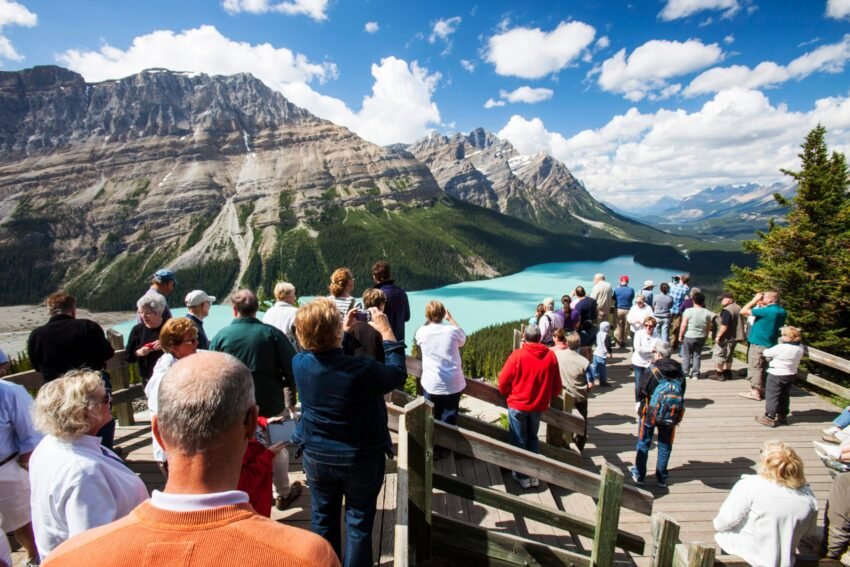
America’s national parks continue to see record visitation, especially during summer peak season. But travelers are increasingly rethinking when and where they visit. By exploring shoulder seasons, lesser-known parks, alternative entrances, and early or late-day timing strategies, visitors can experience iconic landscapes with fewer crowds, lower costs, and a more meaningful connection to the outdoors.
Why Peak Season Feels More Crowded Than Ever
If you’ve searched “Why are national parks so crowded now?” you’re not alone. According to the National Park Service (NPS), total recreation visits have remained historically strong in recent years, frequently surpassing 300 million annual visits. While that number fluctuates year to year, peak summer months—June through August—concentrate the majority of visitation into a narrow window.
Certain parks bear the brunt of that concentration. Yosemite National Park, Yellowstone National Park, and Zion National Park regularly experience vehicle congestion, timed-entry systems, and limited parking by mid-morning in July.
The issue isn’t just total visitors—it’s timing. Most families travel during school breaks. Most first-time visitors prioritize iconic parks. Most arrive between 10 a.m. and 3 p.m. The result is compression, not necessarily overuse across the entire calendar.
Rethinking peak-season travel begins with recognizing that the calendar—and geography—offer more flexibility than many assume.
Shoulder Season: The Most Practical Alternative
For many Americans asking, “What is the best time to visit national parks to avoid crowds?” the answer is often shoulder season.
Shoulder season typically falls in:
- Late April to early June
- September through mid-October
During these months, parks often maintain full accessibility while visitation drops meaningfully after summer vacation ends.
For example, Grand Teton National Park in late September offers:
- Fewer tour buses
- Easier wildlife viewing
- Crisp weather ideal for hiking
- Greater lodging availability
Similarly, Acadia National Park in early October combines fall foliage with reduced parking competition compared to July.
Financially, shoulder season often means:
- Lower hotel rates in gateway towns
- Greater campground availability
- Reduced airfare demand
Weather considerations are essential. Snow may linger in higher elevations during spring, and some visitor centers may reduce hours in fall. However, for travelers seeking a balanced experience, shoulder season remains one of the most effective crowd-management strategies.
Choosing Parks That Naturally Disperse Visitors
Another frequently searched question: “Which national parks are less crowded?”
While marquee parks receive the most attention, dozens of others offer comparable landscapes with lighter visitation.
North Cascades National Park receives a fraction of the annual visits seen at Yosemite, despite dramatic alpine scenery.
Great Basin National Park offers dark-sky stargazing and bristlecone pines without heavy traffic.
Congaree National Park provides unique floodplain forest ecosystems that rarely feel congested.
It’s important to distinguish between “remote” and “inaccessible.” Many lesser-visited parks have well-maintained roads, ranger programs, and established trails. They simply lack the global name recognition of Yellowstone or the Grand Canyon.
For travelers open to adjusting expectations away from bucket-list branding, these parks deliver quieter immersion.
Rethinking the Daily Schedule
Crowds don’t occupy parks evenly throughout the day. Many visitors underestimate how dramatically timing affects experience.
Arriving at sunrise often means:
- Easier parking
- Cooler temperatures
- Better wildlife activity
- Enhanced photography conditions
By contrast, parking lots at popular trailheads frequently fill by 9 a.m. in summer.
In Arches National Park, early morning entry can make the difference between a peaceful hike to Delicate Arch and a mid-day crowd bottleneck. Similarly, entering Rocky Mountain National Park at first light reduces traffic along Trail Ridge Road.
Late afternoon and early evening can also be effective, particularly in parks where visitors depart after lunch.
Simple daily adjustments can significantly reshape the experience without changing travel dates.
Alternative Entrances and Lesser-Known Areas
Large parks often contain multiple entrances and districts, yet most visitors cluster near the most publicized features.
For example:
- In Great Smoky Mountains National Park, Cades Cove receives intense traffic, while quieter trails near Cosby or Cataloochee remain underutilized.
- In Grand Canyon National Park, the North Rim sees significantly fewer visitors than the South Rim due to seasonal access limitations.
Understanding park layout in advance can reveal quieter corridors. Park maps, ranger consultations, and official NPS trip-planning resources provide valuable insights.
This approach preserves access to iconic parks while dispersing impact.
Weekday Travel and Micro-Season Windows
Another overlooked strategy is midweek visitation. Tuesdays through Thursdays often show measurable drops in entry volume compared to weekends.
Travelers with schedule flexibility—remote workers, retirees, or families planning extended road trips—can benefit substantially from weekday entries.
Micro-season windows also exist:
- Early June before most schools close.
- Late August after regional school calendars resume.
- Early November in desert parks before winter weather intensifies.
Understanding regional school schedules can provide unexpected advantages.
Permit Systems and Reservation Planning
Several high-traffic parks have introduced timed-entry or reservation systems in response to demand. While initially seen as restrictive, these systems can enhance predictability.
For example:
- Timed-entry reservations at Rocky Mountain National Park manage vehicle volume.
- Shuttle systems at Zion reduce private car congestion.
For travelers asking, “Do I need reservations to enter national parks?” the answer increasingly depends on the park and season.
Key preparation steps:
- Check the official National Park Service website for alerts.
- Reserve campsites months in advance for summer.
- Consider gateway-town lodging as backup.
- Monitor cancellation openings.
Advanced planning is now part of responsible peak-season travel.
Financial Implications of Off-Peak Planning
Peak-season congestion often correlates with higher costs. Gateway towns surrounding parks like Yosemite and Yellowstone see elevated lodging rates in July and August.
By contrast, shoulder-season bookings can reduce nightly rates significantly, particularly in independent lodges and regional hotels.
Campers may also benefit from increased availability outside prime months.
Airfare follows similar patterns. Flights to western gateway cities—Bozeman, Jackson, Fresno—often peak in midsummer.
Strategically adjusting timing can reduce overall trip cost without sacrificing core experiences.
Environmental Considerations
Beyond convenience, rethinking peak travel has environmental implications. Concentrated visitation stresses infrastructure, trails, and wildlife habitats.
Dispersing visitation across seasons and parks:
- Reduces erosion pressure on high-traffic trails.
- Minimizes wildlife disturbance.
- Supports smaller park units financially.
- Strengthens long-term conservation sustainability.
Thoughtful timing aligns visitor experience with preservation goals.
Frequently Asked Questions
1. What is the least crowded month to visit national parks?
Typically January through March, though weather may limit access in northern parks.
2. Is September a good time to visit national parks?
Yes. Many parks see reduced visitation after Labor Day, with favorable weather conditions.
3. Are timed-entry reservations becoming permanent?
Some parks continue pilot programs; always verify on official NPS platforms.
4. Which U.S. national parks are best for solitude?
North Cascades, Great Basin, and Congaree frequently offer quieter experiences.
5. Are weekdays significantly less crowded?
Yes, particularly Tuesday through Thursday.
6. Does visiting early morning really make a difference?
In many parks, parking availability and trail congestion improve dramatically before 8 a.m.
7. Is winter a good time to visit national parks?
It can be, especially in desert parks, though mountain parks may have limited access.
8. Are shuttle systems mandatory?
In some parks during peak months, yes. Policies vary by location.
9. How far in advance should campsites be booked?
For peak summer, 3–6 months ahead is often necessary.
10. Can I still enjoy major parks during summer?
Yes—with early starts, alternative areas, and strategic planning.
A More Intentional Way to Experience America’s Parks
Peak-season travel is not inherently problematic. It becomes challenging when timing, expectations, and planning do not align with reality. By embracing shoulder seasons, diversifying park selection, adjusting daily schedules, and leveraging official resources, travelers can experience America’s protected landscapes in a more thoughtful way.
Rethinking when and how we visit does more than reduce frustration—it deepens appreciation.
Planning Shifts That Make a Meaningful Difference
- Target late spring and early fall windows.
- Enter parks before 8 a.m. when possible.
- Research alternative districts within major parks.
- Explore lesser-known national parks.
- Use official NPS alerts and reservation systems.
- Consider midweek itineraries.