

For decades, America’s quintessential road trips have been etched in the collective imagination: Route 66, the Pacific Coast Highway, the Blue Ridge Parkway. But there is a journey, a collection of destinations so profound and visually staggering, that it redefines the very concept of a national park adventure. Tucked into the rugged heart of the American Southwest is a secret that, once discovered, becomes a lifelong obsession: Utah’s Mighty 5.
This is not a single secret, but a constellation of five—Arches, Canyonlands, Capitol Reef, Bryce Canyon, and Zion. A 400-mile geological wonderland where the earth has been carved, cracked, and colored into a spectacle that feels less like our own planet and more like a gallery of divine artistry. For those willing to venture beyond the well-trodden paths, the Mighty 5 offer a pilgrimage into the sublime, a journey through time written in stone.
This guide is your key to unlocking that secret. Built on years of firsthand exploration, meticulous research, and a deep respect for these fragile landscapes, it is designed to be your most trusted resource for planning an unforgettable expedition into the American outback.
The Call of the Colorado Plateau: A Geological Primer
To understand the Mighty 5 is to understand the story of the Colorado Plateau, a vast, mostly undeveloped region defined by its layered rock formations. For hundreds of millions of years, this area was a dynamic landscape of ancient seas, massive deserts, and winding rivers. Sediments piled up, layer upon layer, compressing into sandstone, limestone, shale, and mudstone.
Then, the real artist went to work. Tectonic forces lifted the entire plateau, starting around 15 million years ago. This uplift gave water its gravitational power. The Colorado River and its tributaries began their patient, relentless work, carving deep canyons. Wind, ice, and rain joined in, sculpting the soft rock into the impossible shapes we see today. The vibrant colors—the reds, oranges, whites, and purples—come from iron oxide (rust), manganese, and other minerals that stained the sandstone over eons.
This is the stage upon which the drama of the Mighty 5 unfolds. Each park showcases a different chapter of this epic geological story.
1. Arches National Park: A Gallery of Stone and Sky
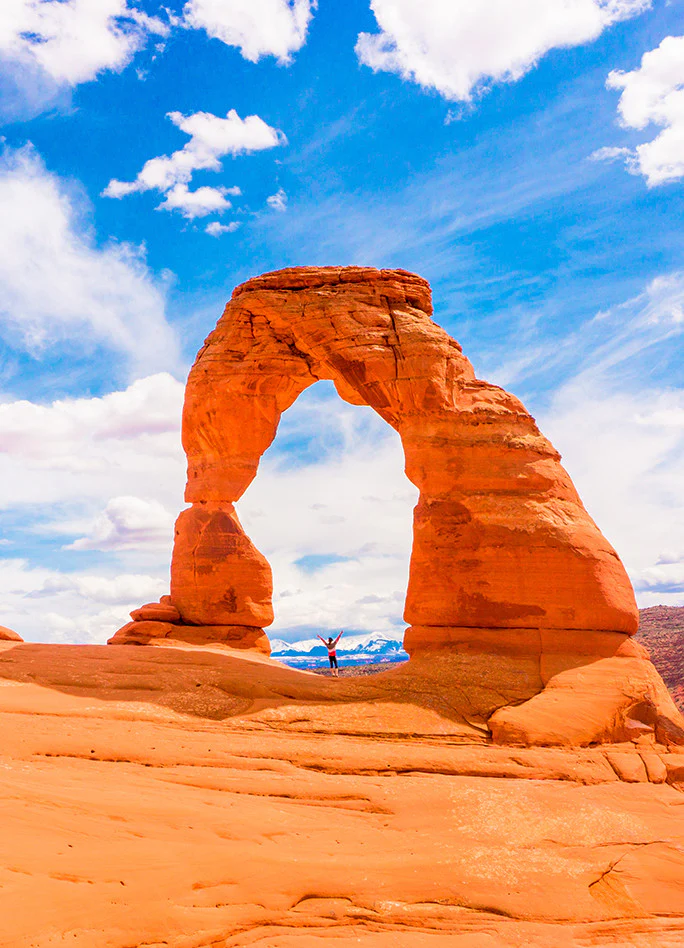
Just north of the adventure hub of Moab, Arches National Park is a concentrated dose of the surreal. It boasts the world’s highest density of natural stone arches—over 2,000 documented—each one a unique monument to erosion and time.
The Unmissable Experience:
- Delicate Arch: This is Utah’s unofficial symbol. The 3-mile round-trip hike is moderately strenuous, ascending slickrock with some exposure, but the reward is unparalleled. Seeing the 65-foot-tall arch freestanding on the lip of a vast sandstone bowl, especially at sunset, is a spiritual experience. For a less crowded, distant view, take the short walk to the Lower or Upper Viewpoints.
- The Windows Section & Double Arch: Often called “the world’s largest concentration of arches,” this area offers maximum payoff for minimal effort. A flat, one-mile loop lets you walk right up to North Window, South Window, and Turret Arch. A short stroll away is Double Arch, a massive, powerful structure where two arches share the same stone foundation, famously featured in Indiana Jones and the Last Crusade.
- Park Avenue & Courthouse Towers: The first major stop as you enter the park, this viewpoint offers a staggering skyline of monolithic skyscrapers of stone, resembling a metropolitan cityscape carved by nature.
- Devils Garden & Landscape Arch: This is the park’s premier hiking area. The trail to Landscape Arch—one of the longest stone spans in the world at 290 feet—is relatively easy. Beyond here, the trail becomes a thrilling primitive route requiring scrambling and navigation past a collection of other stunning arches like Partition and Double O.
Expert Tip: Arches is incredibly popular. Reservation-based timed entry is required for most of the year. Book these well in advance at Recreation.gov. To avoid the crowds and experience the magic of the arches in the most dramatic light, plan to hike for sunrise or sunset. The heat in the summer is intense; carry far more water than you think you’ll need.
2. Canyonlands National Park: The Wild and the Vast
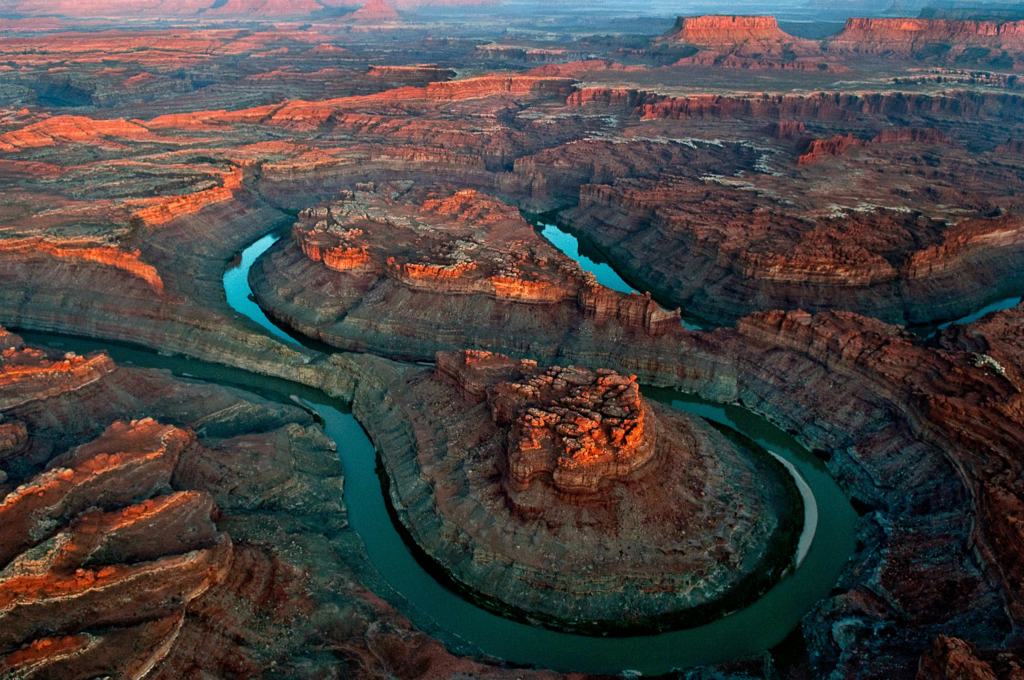
If Arches is a curated gallery, Canyonlands is the untamed wilderness. Divided by the Colorado and Green Rivers into four distinct districts, this park is vast, rugged, and profoundly isolating. It’s a place that doesn’t just show you grandeur; it makes you feel your own smallness in the face of deep time.
The Districts & Their Characters:
- Island in the Sky: The most accessible and visited district, perched on a massive mesa 1,000 feet above the surrounding canyons. The views here are panoramic and breathtaking.
- Mesa Arch: A short, easy hike leads to this thin, elegant arch perfectly framing the White Rim and the La Sal Mountains beyond. It’s a legendary sunrise spot, as the sun ignites the underside of the arch in a fiery glow.
- Grand View Point Overlook: The name says it all. This is the culmination of the park road, offering a staggering 100-mile view across the carved labyrinth of canyons.
- Upheaval Dome: A geological mystery. This bizarre, three-mile-wide crater is either a salt dome pushed from below or the scar of a meteorite impact. The hike to the first overlook is short and rewarding.
- The Needles: Named for its colorful spires of Cedar Mesa Sandstone, this district is a hiker’s paradise. It’s more remote, requiring a long drive down a bumpy road, but rewards with intricate landscapes, ancient Puebloan ruins, and a sense of true exploration.
- Chesler Park Loop: A demanding but spectacular 11-mile loop that takes you through a grassy meadow surrounded by a fortress of needles, through narrow, deep joint cracks, and offers unparalleled solitude.
- The Maze: This is the real deal. The most remote and inaccessible part of the park, requiring serious 4×4 vehicles, self-sufficiency, and backcountry expertise. It’s a multi-day commitment for the most seasoned adventurers.
- The Rivers (Colorado & Green): These are the forces that carved the park. Rafting these rivers offers a completely different perspective, from calm, family-friendly floats to legendary whitewater rapids in Cataract Canyon.
Expert Tip: Do not underestimate the scale of Canyonlands. Distances are vast, and services are non-existent. Fuel up, pack food and water, and have a full tank of gas. Island in the Sky and The Needles are separate districts; driving between them can take 2-3 hours. For a truly epic adventure, look into a guided 4×4 tour of the White Rim Road, a 100-mile dirt track that skirts the mesa base.
3. Capitol Reef National Park: The Hidden Oasis
Often overlooked on the rush between Moab and Bryce, Capitol Reef is the quiet, beautiful secret of the Mighty 5. Its defining feature is the Waterpocket Fold, a 100-mile long monocline—a “wrinkle on the earth”—that created a dramatic barrier of cliffs, canyons, and domes.
A Land of Contrasts:
- Historic Fruita: This is the park’s heart. Settled by Mormon pioneers in the 1880s, this verdant oasis along the Fremont River is a stunning contrast to the surrounding desert. You can still pick fruit (for a fee) from the original orchards of cherries, apricots, peaches, and apples in season—a uniquely delightful park experience.
- Scenic Drive: A 10-mile paved road that winds through the dramatic scenery of the Fold, with spur roads into gravel routes like Grand Wash and Capitol Gorge. These short, flat hikes take you between towering Navajo Sandstone walls, past pioneer register inscriptions, and to the waterpockets (natural depressions) that give the fold its name.
- Cassidy Arch: Named for the outlaw Butch Cassidy, who supposedly used the area as a hideout, this hike is a gem. A moderately strenuous 3.4-mile round-trip trail leads you to an arch you can actually walk on top of, with incredible views of the Grand Wash.
- Cathedral Valley: A remote northern district accessible by high-clearance vehicles. Its stark, alien landscape features monolithic temples of red rock like the Temple of the Sun and Moon, best visited at sunrise or sunset for phenomenal photography.
Expert Tip: Capitol Reef’s charm is in its slower pace. Don’t rush it. Stay a night in the nearby town of Torrey, and be sure to stop at the Gifford Homestead in Fruita for a slice of their legendary homemade pie. It’s a park tradition. The pie flavors change daily, but the happiness they induce is a constant.
4. Bryce Canyon National Park: The Silent City of Hoodoos
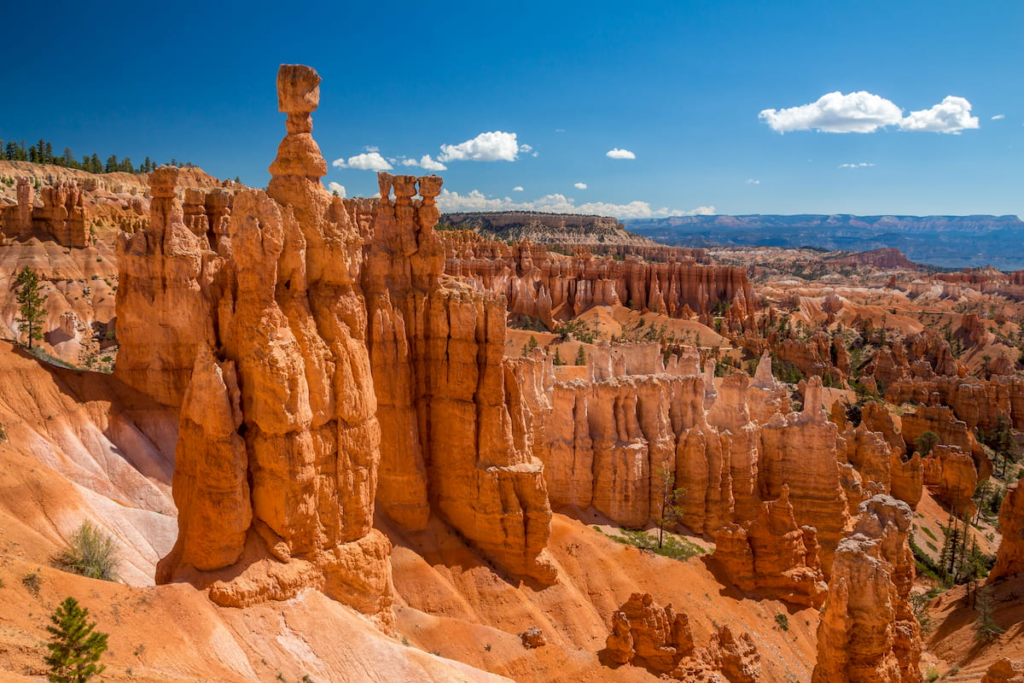
If the other parks feel grand and imposing, Bryce Canyon feels whimsical and impossible. It is not a canyon carved by a river, but an amphitheater carved by frost-wedging and rainwater erosion at the edge of the Paunsaugunt Plateau. The result is the world’s largest collection of hoodoos—irregular columns of rock that stand in silent, crowded congregations.
A Landscape of Fantasy:
- Sunrise & Sunset Points: These are the classic, must-see viewpoints overlooking the Bryce Amphitheater. At sunrise, the hoodoos are set ablaze with light, and at sunset, they glow with a deep, warm alpenglow. The view down into the “Silent City” is simply unforgettable.
- The Navajo Loop & Queens Garden Trail: This is the park’s most popular hike for a reason. A 2.9-mile combination loop descends from Sunset Point through the iconic Wall Street section (a narrow slot between towering cliffs), past majestic hoodoos like Thor’s Hammer, and through the Queen’s Garden, where a rock formation resembles Queen Victoria. The ascent back up brings you through more stunning scenery. It’s a moderate hike that delivers maximum impact.
- Inspiration Point & Bryce Point: For a broader, more panoramic view of the entire amphitheater, these viewpoints are superior. They offer a breathtaking vista of thousands of hoodoos stretching to the horizon, revealing the immense scale of the geological process at work.
- Peek-A-Boo Loop Trail: A more strenuous 5.5-mile loop that takes you deeper into the heart of the amphitheater, offering some of the most dramatic and up-close hoodoo views in the park.
Expert Tip: Bryce Canyon sits at over 8,000 feet in elevation. The air is thin, and the weather is highly variable. It can be sunny and warm, then suddenly see a hailstorm. Dress in layers. The best light for photography and the most comfortable hiking temperatures are in the early morning and late afternoon. For a truly magical experience, consider a stargazing program; Bryce has some of the darkest skies in the country and is designated an International Dark Sky Park.
5. Zion National Park: The Sanctuary of Stone
We end our journey at Zion, the most visited of the Mighty 5 and for good reason. Where the other parks often feel like you are looking out at the scenery, Zion makes you feel inside it. Its name, given by Mormon settlers, means “a place of refuge,” and the sheer, soaring Navajo Sandstone cliffs that enclose the Zion Canyon do indeed create a profound sense of sanctuary and awe.
The Crown Jewel Experiences:
- The Narrows: This is one of America’s premier hikes. There is no trail—you are the river. For much of the hike, you are wading or walking waist-deep (sometimes deeper) in the Virgin River, surrounded by walls that rise a thousand feet and narrow to just 20 feet apart. It is a cool, sublime, and unforgettable journey. A dry bag, sturdy hiking poles, and appropriate water shoes are essential.
- Angels Landing: The park’s most famous (and infamous) hike. A strenuous 5.4-mile round trip with over 1,500 feet of elevation gain. The final half-mile is along a narrow sandstone ridge with chain handholds bolted into the rock, with sheer drop-offs on both sides. It is not for the faint of heart or those with a fear of heights. A permit, obtained by lottery, is now required for this final section. The views from the top, however, are the stuff of legend.
- The Watchman Trail: A fantastic, moderately strenuous alternative to the park’s two headline hikes. This 3.3-mile round-trip trail starts near the South Campground and offers breathtaking views of the lower canyon, the Towers of the Virgin, and the Watchman spire itself, especially beautiful at sunset.
- Canyon Overlook Trail: A short, one-mile round-trip hike located just east of the Zion-Mt. Carmel Tunnel. It requires some scrambling but rewards with one of the best panoramic views in the park, looking down the length of Zion Canyon. It’s the perfect hike if you’re short on time or energy.
Expert Tip: From spring through fall, private vehicles are not allowed on the Zion Canyon Scenic Drive. Access is only via the park’s excellent, free shuttle bus system. Plan accordingly; arrive early to secure parking in Springdale or at the Visitor Center. The shuttle eliminates traffic and is part of the experience. Check the park’s website for water flow levels in The Narrows before you go, as flash flood risk is very real and can be deadly.
Read more: Behind the Comeback: How Brendan Fraser’s Oscar Win Captivated the Heart of America
Crafting Your Mighty 5 Road Trip: An Expert Itinerary
A successful Mighty 5 trip requires strategy. The classic route is a loop, best started and ended in Las Vegas or Salt Lake City.
The 7-10 Day Grand Tour:
- Day 1: Arrive in Las Vegas. Stock up on supplies, then drive (2.5 hours) to Springdale, the gateway to Zion. Settle in and enjoy the town.
- Day 2: Explore Zion National Park. Hike the Watchman Trail in the morning, then take the shuttle up-canyon. If you have a permit, attempt Angels Landing, or instead hike the beautiful and less-crowded Emerald Pools trails.
- Day 3: Zion’s The Narrows. Dedicate a full day to this world-class hike. Start early to avoid the crowds. Drive to Bryce Canyon City (1.5 hours) in the evening.
- Day 4: Bryce Canyon Sunrise & Hiking. Catch sunrise at Sunrise Point, then hike the Navajo/Queens Garden combination loop. In the afternoon, drive the scenic road to its end at Rainbow Point. Overnight near Bryce.
- Day 5: Journey to Capitol Reef. Drive the incredibly scenic Highway 12, an “All-American Road,” passing through Grand Staircase-Escalante National Monument (3 hours). Explore the Fruita district and Scenic Drive in the afternoon. Overnight in Torrey.
- Day 6: Moab Bound. Drive to Moab (2.5 hours). In the afternoon, get a taste of the adventure by visiting the easy-to-access Corona Arch or taking a dip in the Colorado River.
- Day 7: Arches National Park. Use your timed entry reservation. Hike to Delicate Arch for sunrise or, for a less crowded experience, late afternoon. Explore the Windows Section and Double Arch. Enjoy a well-deserved dinner in Moab.
- Day 8: Canyonlands’ Island in the Sky. Witness sunrise at Mesa Arch. Hike to Grand View Point and Upheaval Dome. In the evening, consider a sunset jet boat tour or 4×4 adventure with a local outfitter.
- Day 9: Departure. Drive back to Las Vegas (4.5 hours) or Salt Lake City (3.5 hours).
Essential Travel Wisdom (The EEAT Edge):
- Seasonality: Spring (April-May) and Fall (September-October) are ideal. Summers are scorchingly hot and crowded. Winters are cold, with snow at higher elevations (especially Bryce), but offer incredible solitude and beauty.
- Lodging & Camping: Book accommodations and campsites 6-12 months in advance, especially for in-park locations. Gateway towns like Springdale, Moab, and Torrey have a range of options.
- Leave No Trace: This is sacred, fragile land. Pack out all trash, stay on designated trails, do not touch or create rock cairns, and do not deface rocks with graffiti. “Take only pictures, leave only footprints.”
- Hydration is Life: The desert air is deceptively dry. Drink water consistently, even if you don’t feel thirsty. A general rule is one gallon (4 liters) per person, per day.
- Reservations & Permits: This is the new reality for popular parks. Check each park’s official NPS website meticulously for timed entry (Arches), shuttle tickets (Zion), and hiking permits (Angels Landing).
Conclusion: The Secret That Transforms
Utah’s Mighty 5 is a secret not because it’s unknown, but because its true essence cannot be understood through photographs or words alone. It must be felt in the dry heat on your skin, the ache in your muscles after a long hike, the profound silence of a canyon at dusk, and the humbling sight of a star-filled sky undimmed by city lights.
This is more than a vacation; it’s an immersion into the raw power of nature and the deep time of geological history. It’s America’s best-kept secret, not for being hidden, but for possessing a transformative power that awaits all who answer its call. The red rocks are waiting. Your journey into the otherworldly begins now.
Read more: Zendaya’s Latest Red Carpet Look Breaks the Internet: A Breakdown of Her Stylist’s Genius
Frequently Asked Questions (FAQ)
Q1: What is the best order to visit the Mighty 5?
There is no single “best” order, but the most logical and scenic route is a counter-clockwise loop starting from the southwest: Zion → Bryce Canyon → Capitol Reef → Arches → Canyonlands. This order efficiently links the parks via stunning drives like Highway 12 and allows you to gradually build up to the grand scale of Canyonlands.
Q2: How many days do I need to see all five parks?
While it’s possible to “check the box” on each park in 5-7 days, to truly experience them without exhausting yourself, 7-10 days is ideal. This allows for at least one full day of hiking and exploration in each park, plus travel time between them.
Q3: Is this trip suitable for families with young children?
Absolutely! The parks are fantastic for families. Focus on the many short, paved, or well-maintained trails to viewpoints (like the Windows in Arches, Mesa Arch in Canyonlands, and the Rim Trail at Bryce). The Junior Ranger programs offered at every park are an excellent way to engage children. Just be sure to manage expectations, prioritize hydration and snacks, and avoid dangerous, exposed trails.
Q4: What should I pack for this trip?
Key essentials include:
- Sturdy, broken-in hiking boots
- Layered clothing (temperatures swing dramatically)
- A wide-brimmed hat and sunglasses
- Sunscreen and lip balm with high SPF
- A refillable water bottle or hydration reservoir (at least 3L capacity)
- Daypack for hikes
- Hiking poles (especially for The Narrows and steep descents)
- Camera and extra batteries
- Physical map or downloaded offline maps (cell service is very limited)
Q5: When is the absolute worst time to go?
The peak of summer, particularly July and early August, is challenging. Crowds are at their maximum, and temperatures in Arches and Canyonlands can easily exceed 100°F (38°C), making strenuous hiking dangerous. If you must go in summer, start your hikes at dawn and be finished by 11 a.m.
Q6: Are the parks pet-friendly?
National parks have very strict regulations to protect wildlife and the environment. With very few exceptions, pets are not allowed on trails, in public buildings, or in the backcountry. They are typically only permitted in developed areas (like campgrounds, picnic areas, and paved roads) and must be leashed at all times. It is often best to board your pet or arrange for a pet-sitter.
Q7: I’m not a strong hiker. Can I still enjoy the Mighty 5?
Without a doubt. The most iconic features of these parks are often visible from scenic drives and short, accessible walks to overlooks. You can witness the grandeur of the Grand View Point in Canyonlands, the Bryce Amphitheater from the rim, and the Courthouse Towers in Arches without embarking on a single strenuous hike.
Q8: How do I deal with the crowds?
The “secret” is out, so strategy is key:
- Visit in the shoulder seasons (Spring/Fall).
- Arrive early (before 8 a.m.) and stay late (after 3 p.m.). The light is better, and the crowds are thinner.
- Utilize the shuttle systems (Zion, Bryce in peak season).
- Seek out less popular trails. Instead of Delicate Arch, try the Park Avenue trail. Instead of the main Bryce amphitheater, explore the Fairyland Loop area.
- Embrace the silence of the backcountry. Even a short walk away from a main viewpoint can bring instant solitude.