

Summary
Busy American households are reshaping dinner prep to fit modern schedules, blending convenience with nutrition, cost awareness, and flexibility. From smarter planning and simplified recipes to strategic use of prepared foods and kitchen technology, families are finding practical ways to make weeknight meals more manageable without sacrificing quality, health, or shared time at the table.
The Modern Dinner Dilemma
For many American households, dinner prep no longer fits the traditional mold of a leisurely evening routine. Dual-income families, longer commutes, remote work blurring personal boundaries, children’s extracurricular schedules, and rising food costs have fundamentally changed how people approach meals. Dinner is still important—but how it happens is evolving.
According to data from the U.S. Bureau of Labor Statistics’ American Time Use Survey, the average American spends just over 37 minutes per day on food preparation and cleanup, a figure that has steadily declined over decades. At the same time, surveys from the Pew Research Center show that families continue to value shared meals for health and connection. The tension between time scarcity and the desire for home-cooked food has sparked a quiet but meaningful rethink of dinner prep.
Rather than abandoning home cooking, busy households are redefining it—favoring efficiency, adaptability, and realistic expectations over perfection.
Why Traditional Meal Prep No Longer Works for Many Families
Classic meal prep advice often assumes predictable schedules, ample refrigerator space, and uninterrupted weekends. For many households, those assumptions simply don’t hold.
Work hours vary. Children’s activities shift week to week. Grocery prices fluctuate. Energy levels dip unexpectedly. In this context, rigid weekly meal plans or marathon Sunday cooking sessions can feel more stressful than helpful.
Many families report three common friction points:
- Decision fatigue at the end of the day
- Food waste from unused prepped ingredients
- Burnout from overly ambitious cooking goals
The result isn’t a rejection of planning—but a move toward more flexible, forgiving systems that support real life.
The Rise of Flexible Planning Over Rigid Meal Schedules
Instead of mapping out exact meals for every night, households are increasingly planning in broader strokes. This approach emphasizes components and categories rather than fixed recipes.
A common strategy is planning by type of meal:
- Two fast assembly dinners (salads, wraps, grain bowls)
- Two comfort-style cooked meals
- One leftover-based night
- One wildcard night for takeout or freezer meals
This structure reduces pressure while still offering guidance. It also allows families to respond to changing schedules without feeling like they’ve failed the plan.
Some households take flexibility even further by prepping interchangeable elements—roasted vegetables, cooked proteins, grains, and sauces—that can be mixed and matched throughout the week. Dinner becomes an act of assembly rather than full-scale cooking.

Convenience Is Being Redefined, Not Rejected
For years, “convenience food” carried a negative connotation. Today’s households are far more nuanced. Convenience isn’t about avoiding cooking altogether—it’s about choosing where effort matters most.
Pre-washed greens, rotisserie chicken, frozen vegetables, jarred sauces, and microwaveable grains are now viewed as legitimate tools, not shortcuts to be ashamed of. The USDA notes that frozen produce often retains comparable nutritional value to fresh, making it a practical option for busy cooks.
Many families consciously combine prepared and fresh items:
- Using store-bought pesto with freshly cooked pasta and vegetables
- Pairing frozen rice with home-seasoned proteins
- Turning leftover roasted chicken into quick tacos or salads
This hybrid approach saves time while maintaining control over flavor and nutrition.
How Time-Saving Techniques Are Changing Weeknight Cooking
Busy households are also adopting cooking methods designed to minimize active time. The goal isn’t to cook less, but to cook smarter.
Slow cookers, pressure cookers, and sheet-pan meals have surged in popularity because they require minimal hands-on attention. Batch cooking is being reframed as “future-proofing”—making meals that intentionally generate leftovers for later in the week.
Other practical shifts include:
- Cooking once, eating twice by doubling recipes
- Choosing recipes with overlapping ingredients
- Cleaning as you go to reduce post-dinner friction
These small adjustments collectively reduce the mental and physical load of cooking.
The Role of Technology in Streamlining Dinner Prep
Technology has quietly become one of the most influential factors in modern dinner routines. From digital grocery lists to smart appliances, tools now support planning and execution in ways that weren’t available a decade ago.
Recipe apps and meal-planning platforms help households save favorite meals, auto-generate shopping lists, and adjust portions. Grocery delivery and curbside pickup—adopted widely during the pandemic—remain popular because they reclaim hours each week.
Smart kitchen appliances, such as programmable pressure cookers and air fryers, are especially valued for their consistency. They reduce the need for constant monitoring, allowing dinner to happen alongside homework, emails, or evening routines.
Cost Awareness Is Driving Smarter Choices
Rising food prices have sharpened household attention on value. According to the Bureau of Labor Statistics, grocery prices increased significantly between 2021 and 2023, pushing families to rethink both what and how they cook.
Busy households are responding by:
- Favoring recipes that stretch proteins with beans, grains, or vegetables
- Cooking seasonal produce that offers better value
- Reducing last-minute takeout by keeping freezer meals on hand
Importantly, cost-saving strategies are being balanced with time constraints. Many families recognize that spending slightly more on pre-cut or prepared items can still save money overall if it prevents expensive takeout orders.
Dinner as a Shared Responsibility, Not a Solo Task
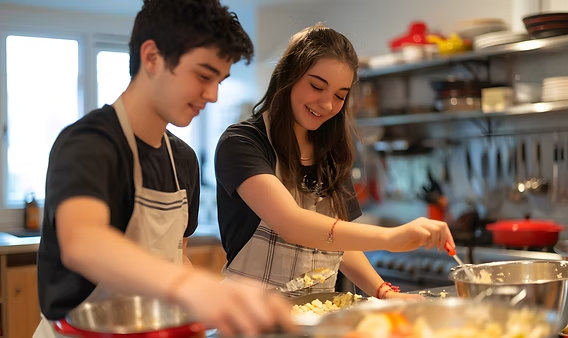
Another major shift is who handles dinner prep. In many households, cooking is becoming a shared responsibility rather than falling to one person by default.
Partners divide tasks based on availability rather than tradition. Older children participate in age-appropriate ways—assembling salads, reheating leftovers, or helping choose meals. Even small contributions reduce the overall burden and build practical life skills.
This collaborative approach makes dinner feel less like an obligation and more like a routine the household manages together.
What Busy Families Are Actually Cooking
The meals that succeed in busy households tend to share a few traits: adaptability, familiarity, and reasonable prep time. These aren’t elaborate dishes—they’re reliable ones.
Popular choices include:
- One-pan chicken or salmon with vegetables
- Pasta dishes that reheat well
- Tacos and bowls that allow customization
- Soups and stews that improve with time
Families also gravitate toward recipes that tolerate substitutions, making it easier to work with what’s already in the fridge.
Health Without Perfection
Perhaps the most important mindset shift is letting go of the idea that every home-cooked meal must be ideal. Nutrition experts increasingly emphasize consistency over perfection, and busy households are taking that message to heart.
A balanced week may include a mix of cooked meals, leftovers, and occasional takeout. What matters is the overall pattern, not individual nights. This perspective reduces guilt and makes sustainable routines more achievable.
Frequently Asked Questions
1. How can busy families reduce weeknight cooking stress?
By planning loosely, relying on flexible meal frameworks, and keeping simple staples on hand.
2. Is meal prepping still worth it if schedules change often?
Yes, but flexible prep—like batch-cooking components—works better than rigid plans.
3. Are convenience foods unhealthy?
Not inherently. Many prepared items, such as frozen vegetables and pre-cooked grains, can support balanced meals.
4. How many nights a week should families cook at home?
There’s no universal number. Many households aim for consistency rather than frequency.
5. What’s the fastest type of home-cooked dinner?
Assembly-style meals using pre-cooked components are often the quickest.
6. How can families save money without spending more time cooking?
Combining cost-aware planning with selective convenience foods helps balance both.
7. Do kids benefit from helping with dinner prep?
Yes. It builds skills, reduces workload, and encourages healthier eating habits.
8. What tools make the biggest difference for busy cooks?
Pressure cookers, air fryers, and grocery apps are among the most impactful.
9. How can households avoid food waste?
By planning flexible meals and cooking dishes that repurpose leftovers.
Where Dinner Prep Is Headed Next
Dinner prep in busy households isn’t becoming less intentional—it’s becoming more realistic. Families are designing systems that respect limited time, fluctuating energy, and evolving priorities. The future of home cooking looks less about mastering complex recipes and more about creating dependable routines that support everyday life. In that sense, rethinking dinner prep isn’t a compromise—it’s an adaptation that helps meals remain meaningful in modern households.
Key Shifts Worth Noticing
- Flexible planning is replacing rigid meal schedules
- Convenience foods are being used strategically, not avoided
- Technology is reducing both time and mental load
- Shared responsibility is reshaping who cooks and how