
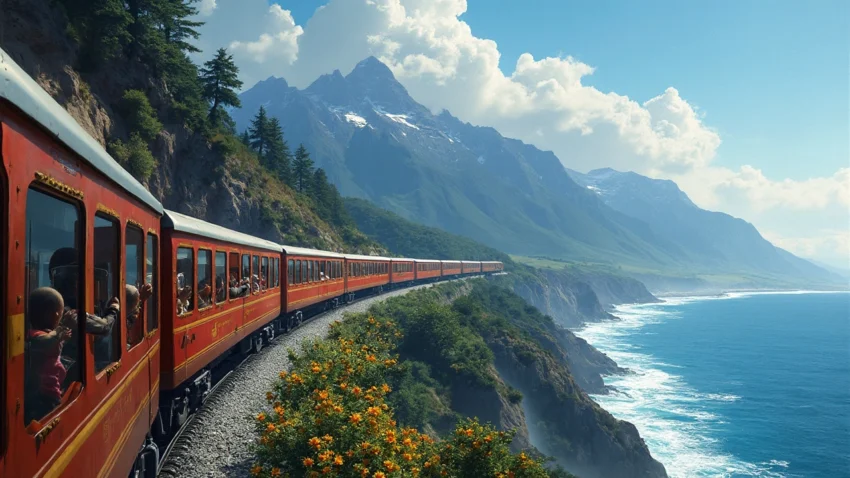
America’s scenic train routes offer a slower, immersive way to experience mountains, coastlines, deserts, and small towns that highways often bypass. From cross-country journeys aboard Amtrak to regional heritage railways, these routes combine comfort, history, and sweeping views. This guide explains the best routes, costs, booking strategies, sleeper options, and practical tips for planning a memorable rail adventure.
In a country built on road trips and air travel, train journeys often feel like an afterthought. Yet rail travel is experiencing renewed interest among Americans seeking slower, more intentional trips. According to Amtrak, annual ridership has rebounded significantly in recent years, with long-distance routes drawing travelers interested in scenery and comfort rather than speed.
Unlike flying, train travel keeps you connected to the landscape. Unlike driving, it allows you to relax, read, dine, and watch the country unfold. For travelers curious about scenic rail journeys in the U.S., this guide covers the routes worth considering, what to expect onboard, and how to plan effectively.
Why Choose a Scenic Train Trip?
Many Americans search: Are scenic train rides worth it? Is it cheaper than flying? Is it comfortable? The answers depend on your priorities.
Scenic rail travel emphasizes the journey itself. Instead of arriving exhausted after a cramped flight, you experience river valleys, mountain passes, forests, deserts, and coastlines through panoramic windows—often inaccessible by car.
Key advantages include:
- Spacious seating compared to economy air travel
- Freedom to move around
- Café and dining cars
- Overnight sleeper accommodations on long routes
- Reduced environmental impact per passenger mile compared to driving solo
While trains are not typically faster than planes, they offer a distinctly different kind of travel—one that prioritizes experience over efficiency.
Iconic Cross-Country and Regional Routes
Amtrak’s California Zephyr
Often considered the most scenic long-distance route in America, the California Zephyr travels between Chicago and San Francisco (terminating in Emeryville). The route crosses the Rocky Mountains and the Sierra Nevada, passing through snow-dusted peaks, canyons, and alpine lakes.
Highlights include:
- The climb through Colorado’s Rocky Mountains
- Ruby Canyon along the Colorado-Utah border
- The Sierra Nevada approach into Northern California
For travelers wondering whether a sleeper cabin is worth it here—the answer is usually yes. The mountain segments occur during daylight hours, and overnight accommodations include meals.
Amtrak’s Coast Starlight
Running between Seattle and Los Angeles, the Coast Starlight showcases Pacific coastline views, Cascade Mountains, and rolling California hills.
The most photographed segment hugs the coast near Santa Barbara, where ocean views stretch uninterrupted for miles. Business class and sleeper options offer access to lounge cars with panoramic windows.
Amtrak’s Empire Builder
The Empire Builder connects Chicago to Seattle and Portland, passing through Glacier Country.
A major highlight is the stretch alongside Glacier National Park. During summer months, travelers often disembark for overnight stays inside the park before continuing west.
Amtrak’s Southwest Chief
Traveling between Chicago and Los Angeles, this route crosses the American Southwest, including New Mexico’s desert landscapes and historic Route 66 corridors.
The scenery shifts dramatically from Midwestern plains to red rock formations, offering a geographic cross-section of the country.
Regional Scenic Railways
For travelers who prefer shorter trips, several regional routes provide immersive experiences:
- Adirondack: Between New York City and Montreal, with Hudson River Valley views
- Cascades: Pacific Northwest coastal and mountain scenery
- Downeaster: Coastal Maine views north of Boston
These routes are ideal for weekend getaways or travelers testing train travel for the first time.
What Does It Cost?
A common question: Are scenic train rides expensive?
Coach fares can be surprisingly affordable when booked early. However, sleeper cabins increase costs significantly, especially during peak summer months.
Approximate ranges (varies by season and demand):
- Coach seat (long-distance): $100–$200+
- Roomette (private sleeper): $400–$900+
- Bedroom suite: $800–$1,500+
Sleeper fares typically include meals, priority boarding, and access to exclusive lounges. For couples or solo travelers who value privacy and rest, the premium can be worthwhile.
Sleeper Cabins vs. Coach: What Should You Choose?
Many travelers debate whether to book coach or upgrade.
Coach offers:
- Wide reclining seats
- Ample legroom
- Lower cost
- Access to café car
Sleeper cabins offer:
- Private accommodations
- Beds (upper and lower berths)
- Included dining
- Shower access (on most long-distance trains)
If your journey is overnight and exceeds 12 hours, a sleeper generally improves comfort. For daytime scenic segments, coach can be sufficient.
When Is the Best Time to Take a Scenic Train Trip?
Season matters significantly.
- Summer: Long daylight hours and access to national parks
- Fall: Foliage in the Northeast and Midwest
- Winter: Snow-covered Rockies (particularly stunning on the California Zephyr)
- Spring: Mild weather and lower fares
For peak routes, booking 2–4 months in advance typically yields better pricing and cabin availability.
Practical Planning Tips
To maximize your experience:
- Choose a seat on the river or ocean-facing side (research beforehand)
- Download entertainment—Wi-Fi can be inconsistent
- Pack snacks, even if dining is included
- Plan buffer time; long-distance trains may experience delays
- Consider breaking the trip into segments with overnight hotel stays
Experienced rail travelers often treat cross-country routes as modular journeys—stopping in cities like Denver or Seattle rather than riding straight through.
Is Train Travel Environmentally Friendly?
Many Americans ask whether trains are more sustainable than flying. According to the U.S. Department of Energy, rail travel produces fewer greenhouse gas emissions per passenger mile compared to cars and airplanes under typical occupancy conditions. While not carbon-free, trains are generally considered one of the more energy-efficient long-distance travel options.
Frequently Asked Questions
1. Are scenic train rides in the U.S. reliable?
Long-distance routes can experience delays due to freight traffic, but most trips remain within reasonable timeframes. Build flexibility into your schedule.
2. Can you bring luggage on Amtrak?
Yes. Generous carry-on allowances typically exceed airline standards, and checked baggage is available at many stations.
3. Is food included on scenic trains?
Meals are included for sleeper passengers on long-distance routes. Coach passengers can purchase meals in café cars.
4. Are train bathrooms clean?
Generally yes, particularly on long-distance routes. Sleeper passengers have access to private or semi-private facilities.
5. Is it safe to travel alone by train?
Yes. Train travel in the U.S. is widely regarded as safe, and solo travelers often appreciate the social but low-pressure atmosphere.
6. Do scenic trains have Wi-Fi?
Some routes offer Wi-Fi, but reliability varies, especially in rural areas.
7. Can children enjoy long-distance train travel?
Yes. The ability to move around makes trains more family-friendly than airplanes for many parents.
8. Are pets allowed?
Small pets are permitted on certain routes with restrictions.
9. How far in advance should I book a sleeper cabin?
Two to six months ahead is recommended for peak travel seasons.
How Scenic Rail Travel Changes the Way You See America
There is something distinct about crossing the country by rail. You notice transitions—farms giving way to foothills, rivers threading through canyons, deserts unfolding slowly instead of flashing past at highway speeds.
You meet fellow travelers in dining cars. You watch sunrise from an observation lounge. You arrive not rushed, but acclimated.
Scenic train routes are not the fastest way across America. They are, however, one of the most reflective. For travelers seeking connection—to landscapes, to history, to slower rhythms—rail travel offers an experience that feels both nostalgic and newly relevant.
If You’re Considering a Rail Journey, Keep This in Mind
- Choose routes known for daylight scenic segments
- Book early for sleepers
- Expect occasional delays
- Pack for comfort
- Break long journeys into multi-city adventures
- Research seating direction for best views