
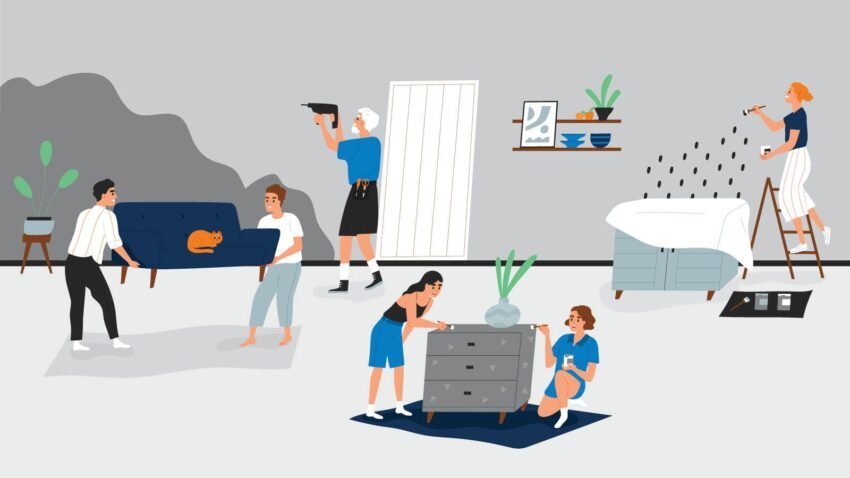
Before calling a contractor, many common home issues can be resolved with practical, low-cost DIY fixes. From sealing drafts to adjusting doors and replacing fixtures, these overlooked improvements often restore function, improve efficiency, and enhance appearance without professional intervention. This guide outlines smart, realistic repairs that save money while maintaining safety and long-term home value.
Why It Pays to Pause Before Hiring a Contractor
When something breaks or looks outdated, many homeowners immediately assume they need a professional. While licensed contractors are essential for structural, electrical, and major plumbing work, a surprising number of issues fall into a different category: minor maintenance problems that appear larger than they are.
According to the U.S. Census Bureau American Housing Survey, routine maintenance issues are among the most common homeowner complaints—yet many are inexpensive to correct. Similarly, research from the National Association of Home Builders consistently shows that deferred maintenance can reduce perceived home value far more than the cost of simple repairs.
The key question homeowners often search for is: How do I know when I can fix something myself?
If the issue is cosmetic, involves basic mechanical adjustments, or requires simple part replacement—and doesn’t involve structural modification, gas lines, or complex electrical work—it may be worth evaluating as a DIY repair first.
Below are smart fixes many homeowners overlook.
1. Seal Air Leaks Around Doors and Windows
Drafty rooms frequently lead homeowners to assume they need new windows. In many cases, however, the real issue is worn weatherstripping or gaps around trim.
The U.S. Department of Energy estimates that sealing air leaks can significantly reduce heating and cooling costs. Replacing weatherstripping or applying caulk around window casings can often be completed in an afternoon.
Signs you may only need sealing:
- Visible light around door frames
- Noticeable temperature differences near windows
- Higher-than-normal energy bills
This small repair often improves comfort immediately.
2. Re-Caulk Bathrooms and Kitchens
Moldy or cracked caulk around tubs and sinks can make a space appear neglected. Fortunately, removing and replacing caulk is one of the most approachable DIY upgrades.
A fresh bead of silicone:
- Improves moisture protection
- Prevents water intrusion
- Enhances visual cleanliness
Home inspectors frequently flag deteriorating caulk, not because it’s expensive to fix, but because it suggests deferred maintenance.
3. Adjust Doors Instead of Replacing Them
Sticky or misaligned doors are often blamed on warped frames. In many homes, the solution is simpler: tightening hinge screws, adjusting strike plates, or adding shims.
Common fixes include:
- Replacing stripped hinge screws with longer ones
- Slightly repositioning latch plates
- Sanding minor edge swelling
These small adjustments restore smooth operation without the expense of door replacement.
4. Replace Outdated Light Fixtures
Outdated or dim lighting can make a home feel older than it is. Swapping a basic flush-mount fixture or installing a modern ceiling fan is often manageable for homeowners with basic electrical knowledge.
The U.S. Department of Energy notes that LED lighting uses substantially less energy than incandescent bulbs. Simply upgrading fixtures and bulbs can modernize a room while reducing utility costs.
If wiring modifications are required, however, consult a licensed electrician.
5. Repair Minor Drywall Damage
Small dents, nail holes, and minor cracks often prompt homeowners to repaint entire rooms—or call a handyman. In reality, patch kits and joint compound can repair localized damage quickly.
Typical process:
- Clean and sand damaged area
- Apply compound
- Sand smooth after drying
- Prime and touch up
When done carefully, patches blend seamlessly into existing walls.
6. Service Your HVAC System Before Replacing It
Uneven temperatures or weak airflow often lead homeowners to believe their HVAC system is failing. However, clogged filters, blocked vents, or dirty coils frequently cause performance issues.
The Environmental Protection Agency notes that proper HVAC maintenance improves efficiency and indoor air quality.
Before calling for full system replacement:
- Replace filters
- Vacuum return vents
- Clear debris from outdoor condenser units
Routine maintenance can restore performance and extend equipment life.
7. Upgrade Cabinet Hardware Instead of Cabinets
Kitchen remodels are expensive, but cosmetic updates can significantly improve appearance.
Replacing dated knobs and pulls:
- Modernizes cabinetry
- Creates cohesive finishes
- Improves tactile experience
Many buyers interpret updated hardware as a sign of ongoing upkeep. It’s a small upgrade with outsized visual impact.
8. Power Wash Exterior Surfaces
Siding, driveways, decks, and walkways accumulate dirt and mildew over time. Hiring professionals for exterior cleaning can be costly, but renting a power washer is often sufficient.
Power washing can:
- Restore original color
- Improve curb appeal
- Extend surface longevity
Be cautious with pressure settings to avoid damage.
9. Fix Running Toilets and Dripping Faucets
Plumbing calls are expensive, yet many common issues involve inexpensive internal components.
A running toilet typically requires:
- Flapper replacement
- Chain adjustment
- Fill valve replacement
Dripping faucets often need new washers or cartridges. According to the Environmental Protection Agency, household leaks can waste nearly 10,000 gallons of water annually.
These repairs are among the most cost-effective DIY fixes available.
10. Improve Insulation in Accessible Areas
Homeowners often assume insulation upgrades require contractors. While wall insulation is complex, accessible attic insulation can be installed using DIY kits.
The U.S. Department of Energy states that proper attic insulation significantly reduces heating and cooling losses.
If your attic floor insulation appears thin or uneven, supplementation may improve efficiency without major renovation.
Frequently Asked Questions
1. How do I know when a repair is safe to DIY?
If it does not involve structural changes, gas lines, or complex electrical systems, it may be manageable with proper research and safety precautions.
2. What repairs should never be DIY?
Major electrical rewiring, load-bearing structural changes, and gas appliance installation should always involve licensed professionals.
3. Does small maintenance really affect home value?
Yes. Visible deferred maintenance can lower buyer confidence and perceived value.
4. Are energy-saving fixes worth the effort?
Sealing drafts, maintaining HVAC systems, and improving insulation can reduce utility costs significantly.
5. How much money can DIY repairs save?
Depending on the repair, homeowners can save hundreds to thousands in labor costs.
6. Should I DIY before listing my home?
Addressing cosmetic and minor mechanical issues before listing often improves marketability.
7. What tools should every homeowner have?
A drill, level, adjustable wrench, stud finder, utility knife, and caulking gun cover most minor repairs.
8. Is it better to repair or replace?
If functionality can be restored affordably, repair is usually the better first step.
9. Can small fixes really prevent bigger problems?
Yes. Preventative maintenance often avoids larger structural or moisture-related damage.
Knowing When DIY Is Smart—and When It Isn’t
The most effective homeowners understand that DIY isn’t about avoiding professionals—it’s about using them strategically. Small, practical fixes restore function, improve efficiency, and protect long-term value. When minor problems are addressed promptly, they rarely escalate into major expenses.
Before hiring a contractor, take time to assess whether the issue is cosmetic, mechanical, or maintenance-related. Often, the simplest solution is the correct one.
Smart First Steps Before Making the Call
- Inspect for simple mechanical adjustments
- Replace worn seals and caulk
- Clean and maintain systems before assuming failure
- Address cosmetic wear promptly
- Evaluate whether part replacement solves the issue